
Calibrating Optical Sensor Demerit Scoring with Loom Stop Telemetry Logs
Calibrating optical sensor demerits against loom stop telemetry eliminates false slub penalties by verifying mechanical fault codes against visual defects.
Calibrating optical sensor demerits against loom stop telemetry eliminates false slub penalties by verifying mechanical fault codes against visual defects.

Residual pectin above 3 percent prevents fiber bundle flattening, inducing premature mechanical yarn jamming that cuts rapier loom efficiency by 19 percent.

Dynamic weaver dispatch using Hawkes process intensity modeling cuts linen warp stop wait times by seventy percent and secures eighty-nine percent shed efficiency.

Viscoelastic tension relaxation in sized bast warps creates fell line migration and set marks unless controlled by active electronic let-off compensation.

Base loom hour rates for dense jacquard weaving require calculating true capital depreciation, speed derating, and reduced operational efficiency per pick.

Moisture plasticizes the amorphous pectin matrix in bast bundles, lowering yarn flexural rigidity while elevating cyclic bending energy dissipation.
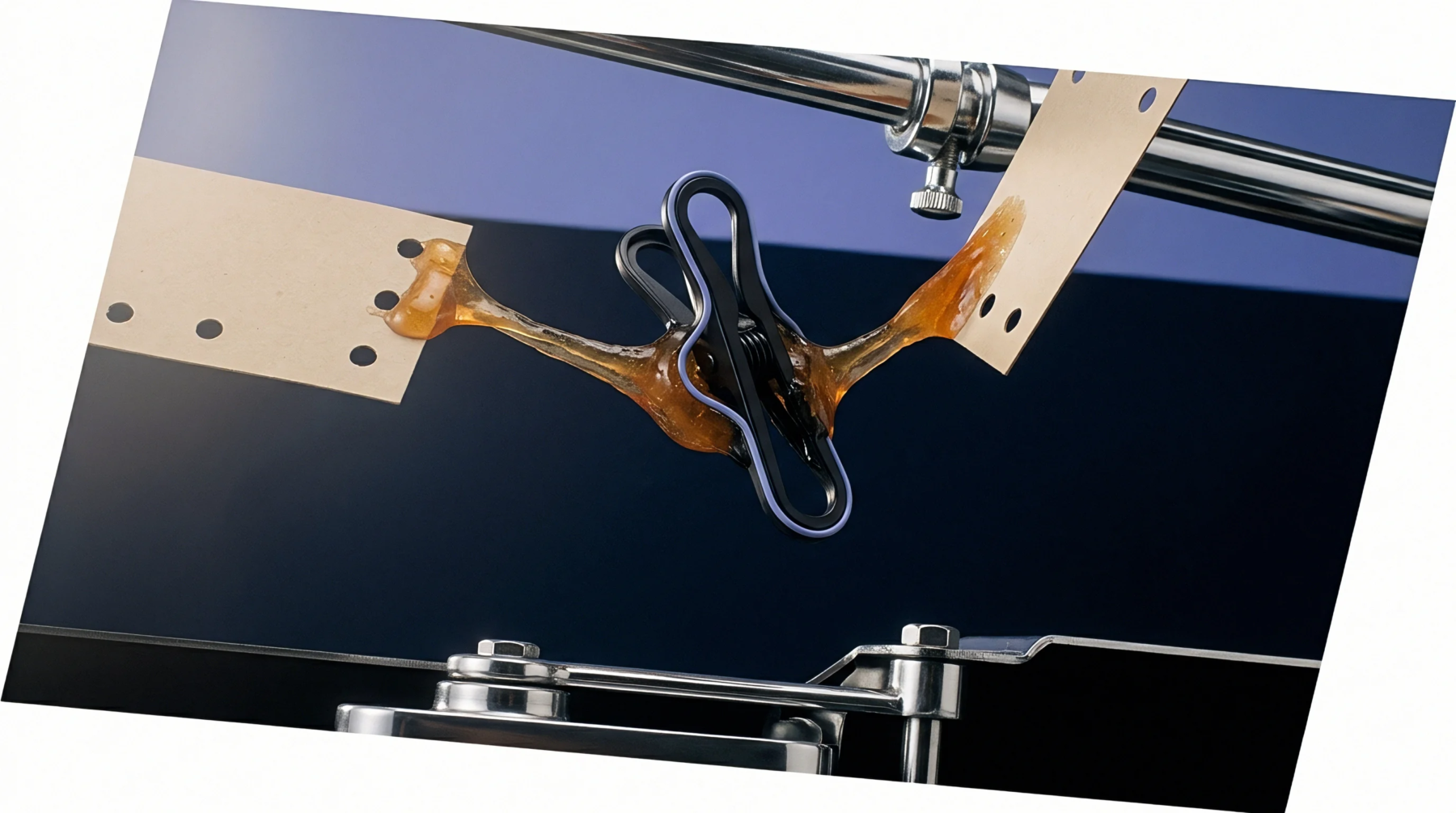
Pure bending laboratory testing isolates fabric bending rigidity and hysteresis width from gravitational shear, yielding precise metrics for cloth tailoring.

Trapped shear modulus rises linearly with chemical cross-link density while interstitial woven constraint scales effective shear stiffness by factor 1.4 to 2.2.

Controlled pectin extraction and asymmetric shed tuning enable stable air-jet linen weaving at 700 picks per minute while reducing landed fabric cost.

Standard cantilever testing and four-point inspection verify greige cloth stiffness and fault densities to enforce contract specifications before finishing.

Primary rapier trim scrap depends on insertion geometry rather than fabric width, requiring exact tail length modeling to prevent yarn yield deficits.

Standardized testing of flexural hysteresis and crimp balance isolates structural yarn friction, securing dimensional stability and reducing garment scrap.
Greige reed marks and starting marks map directly to reed wire spacing and loom stoppage dynamics, requiring electronic let-off adjustment to eliminate defects.

Optimizing rapier clamping timing, catch cord width, and active pre-winder braking reduces total weft waste cascades below six percent on high speed linen sheds.

Booking Chinese linen loom capacity requires evaluating warp preparation bottlenecks and machine hours rather than linear metre price quotes alone.

Fine warp setts collapse loom efficiency through yarn cling and stops; buyers absorb costs via sett surcharges unless target efficiency caps are contracted.
Microfibrillar realignment under shear dictates linen dimensional stability, demanding controlled loom tension and zero-tension wet relaxation to prevent skewing.
Expertise is a utility, not a secret. sentiention™ publishes its working knowledge as open reference: intelligence layer covering the materials it sources, the markets it enters, and the reference that serves both.