Optimizing Warp Preparation Parameters for High Density Linen Weaving
Optimize high-density linen warping via low-drag ceramic creels, 7-degree drum cones, 10% PVA-starch add-on, and 8-tier splitting to keep loom stops below 1.5.
Creel
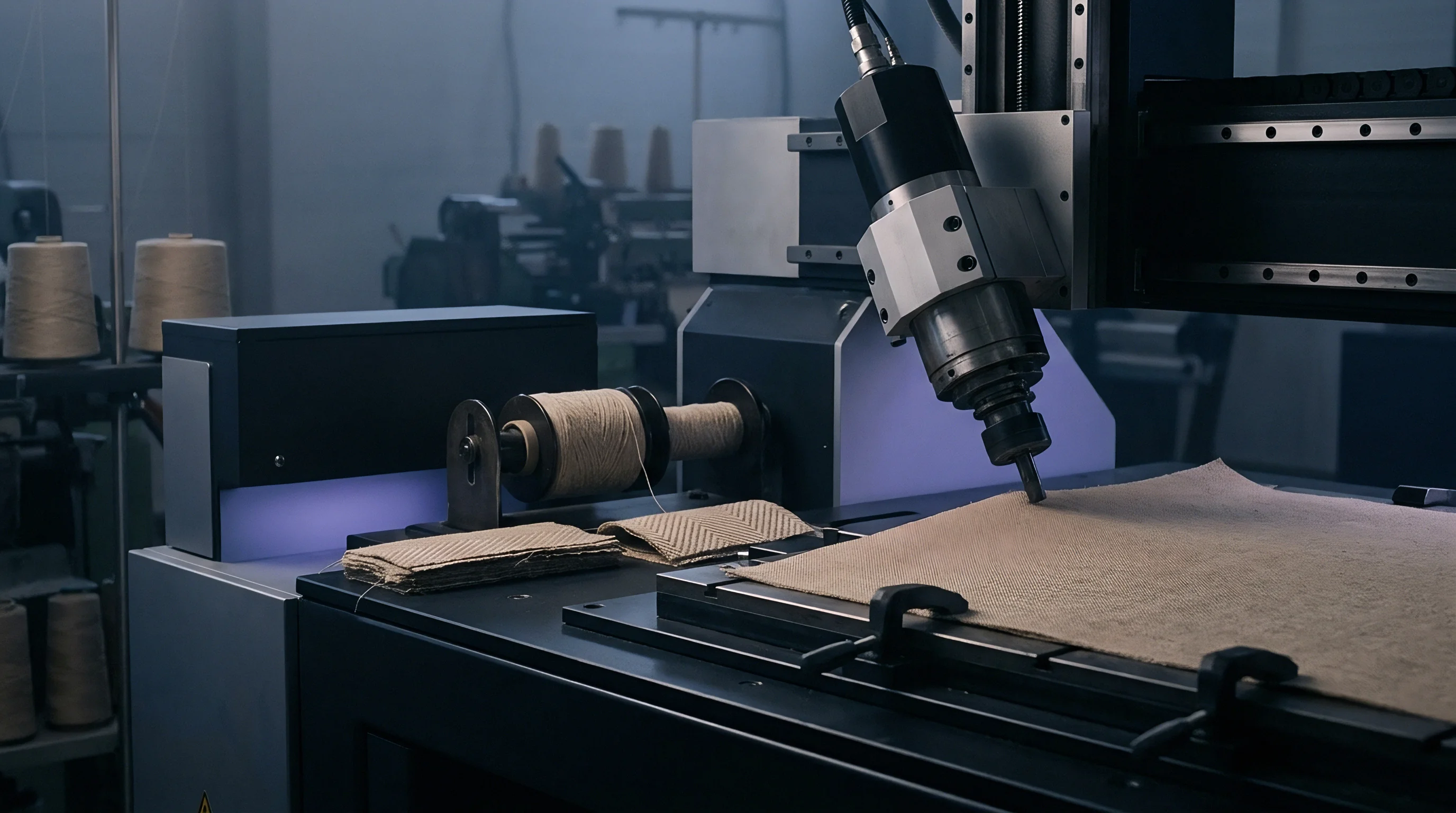
Unwinding tension across wet-spun flax bobbins determines broken end rates at the drop wires. High-density linen constructions ~ warp cover factors above sixty-five percent and yarn counts finer than wet-spun sixty-lea (twenty-eight metric count) ~ tolerate virtually no tension spikes during beam preparation. Flax fiber consists of crystalline cellulose bundles bound by inter-cellular pectin lamellae, leaving elongation at break between 1.5 percent and 2.5 percent, compared to 6.0 percent to 9.0 percent for cotton.
When an end catches during warping offtake, the yarn snaps without plastic deformation. A single broken yarn on a two-thousand-end creel halts the sectional head, leaving a stoppage mark across the full ribbon width.
Individual package holders require dedicated disc or capsule brake dampening. Ballooning dynamics shift as the bobbin diameter runs down from a full cheese to the bare core. A standard three-kilogram wet-spun flax package generates an offtake tension of twelve to fourteen centinewtons at maximum diameter.
As unwinding approaches the cardboard tube, frictional drag against the package shoulder elevates yarn tension beyond thirty-five centinewtons if static guide rods remain in the threadline.
Tension differentials exceeding three centinewtons across adjacent flax packages generate tight ends that rupture at the drop wires during high-speed shed opening.
Modern prep rooms isolate offtake tension with closed-loop electronic tensioners. Sintered aluminum oxide ceramic eyelets keep friction coefficients around 0.12, whereas steel guide wires push friction past 0.28, heating the flax wax and inducing fibrillation that ruins pick insertion. Creel atmospheric regulation sits between 65 percent and 70 percent relative humidity at twenty-two degrees Celsius; below 60 percent, dry yarn snaps under shock as natural gums lose moisture, cutting tensile retention by twenty percent.

Tension Regulation in Direct Offtake
Spring-loaded disc brakes maintain resistance against the yarn body as package diameters deplete. Flax fibers shed loose shives that collect between metal friction discs, creating intermittent clamping forces. When running sixty-lea linen at four hundred meters per minute, this debris accumulation produces erratic tension spikes.
- Capacitive yarn detectors register broken ends within two milliseconds, halting the drive drum before loose ends pull into the warp sheet.
- Rotating ceramic rollers eliminate surface rubbing, replacing static friction with low-drag rotary guidance across all creel tiers.
- Centralized air blowing systems clear bast shives and dust fragments from brake housings every ninety seconds during machine operation.
- Swiveling package arms permit creel operators to mount reserve packages while active spindles complete their unwinding cycle.
Flax Package Geometry and Alignment
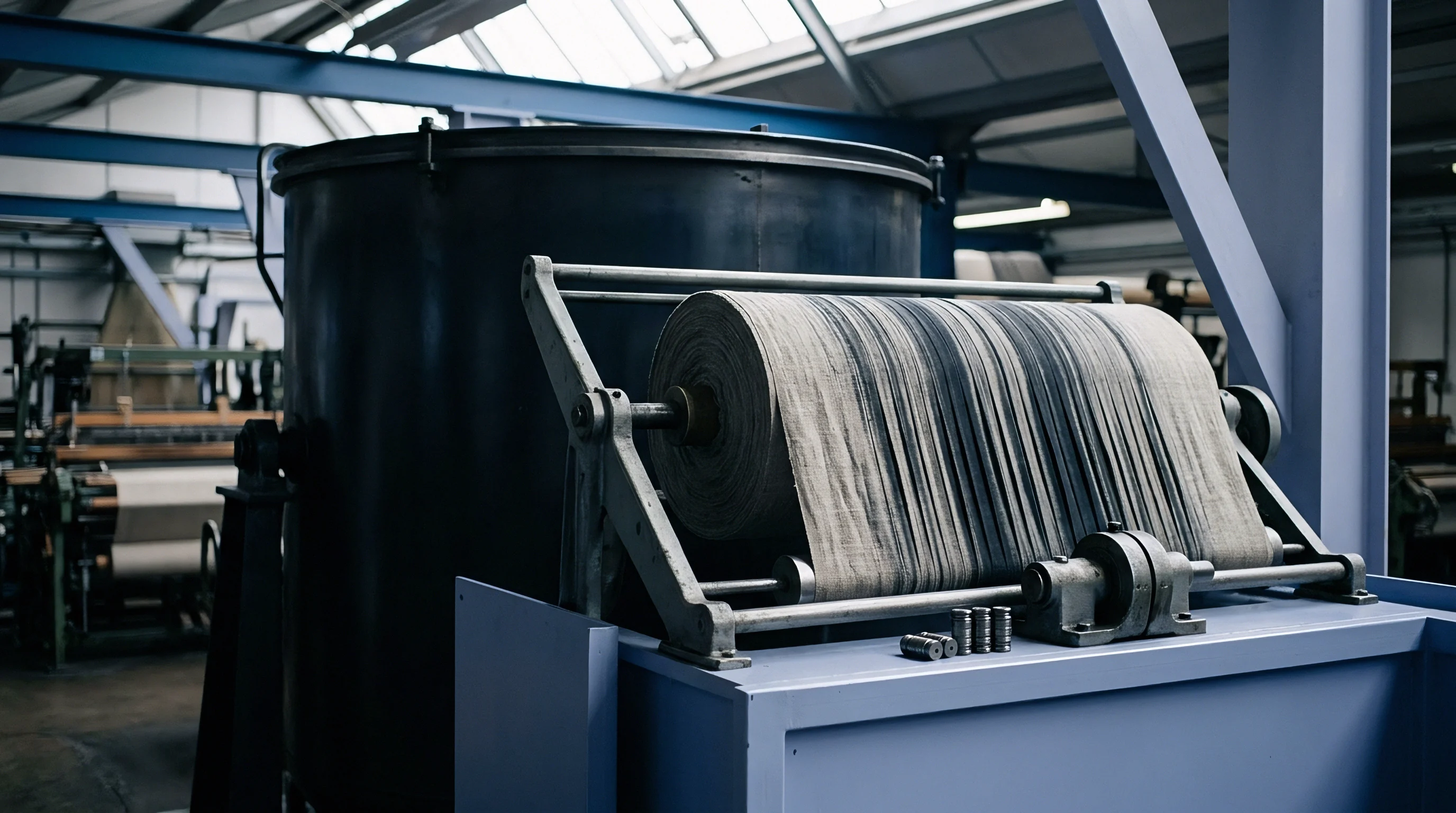
Conical bobbins from automatic winders introduce ballooning variations during high-speed extraction, whereas parallel cheeses wound on perforated stainless tubes yield uniform withdrawal paths. Package traverse length governs yarn departure angles; angles exceeding sixteen degrees cause shoulder slough-offs on fine linen yarns, producing tangled knots that snarl the drop wires.
Alignment between the package center line and the primary guide eyelet is critical for tension stability. Misalignment beyond five millimeters causes the yarn balloon to strike neighboring bobbins. Wet-spun flax carries residual spinning moisture that encourages clinging on the bobbin cheek; when adjacent balloons touch, twin ends interlock and enter the gathering comb together.
The resulting double end distorts local density, leaving a permanent reed mark in the finished cloth.
Excessive offtake drag produces permanent strain crystallization within the bast fibrils, causing thirty percent higher loom warp stop frequencies on the subsequent production shift.

Recipe
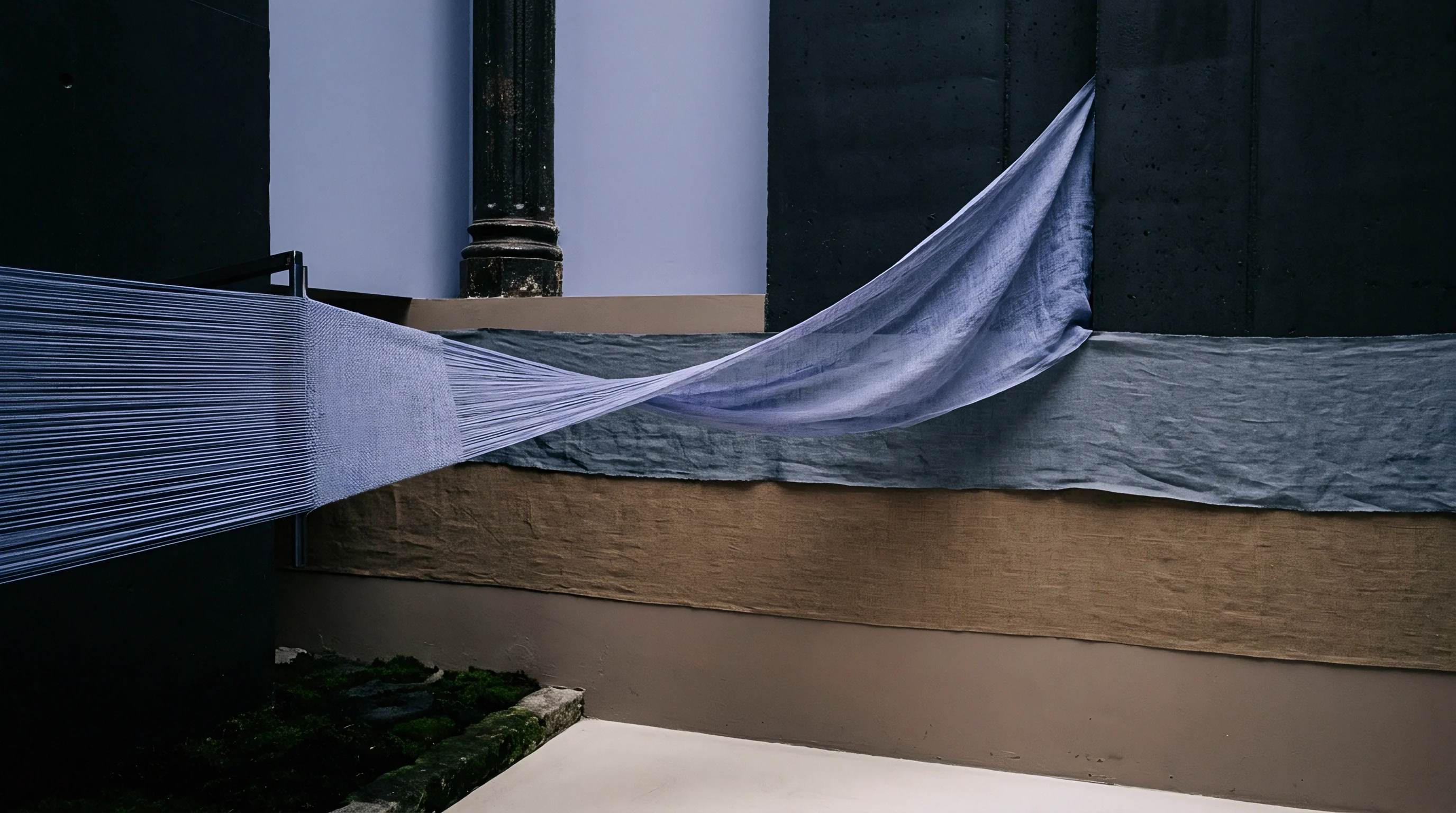
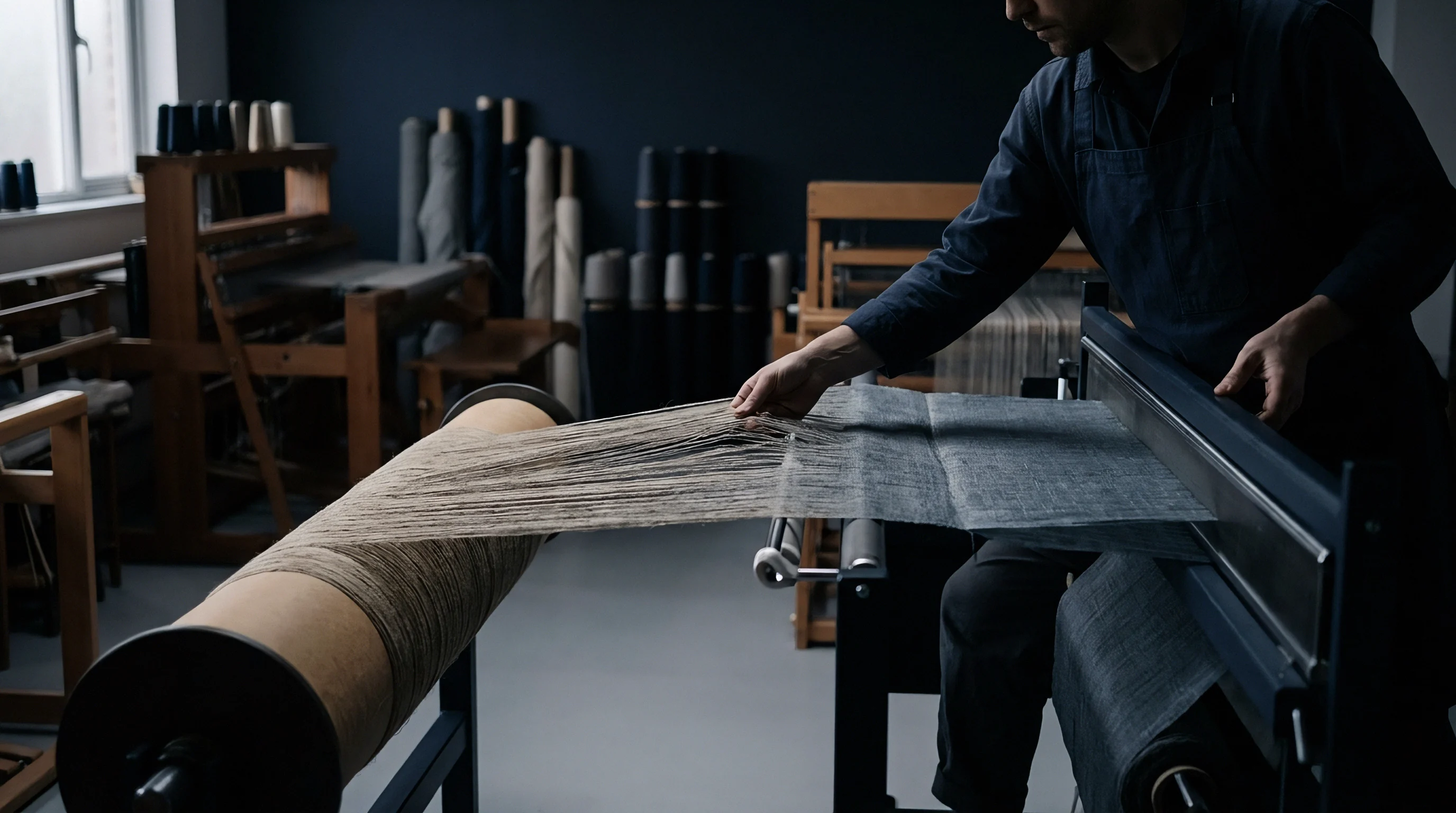
Sizing formulations for high-density flax yarns balance adhesive penetration against surface coat integrity. Pure flax yarn is an assembly of non-continuous ultimate fibers measuring twenty to thirty millimeters, bound by natural pectins, which wet spinning consolidates into a compact, circular cross-section. Dense constructions, such as a 2/1 twill woven at thirty-two ends per centimeter with forty-lea warp, subject yarns to severe abrasion in the reed and drop wires.
Unsized flax loses fifty percent of its structural integrity after one thousand abrasion cycles, requiring size formulations that encapsulate surface fibrils while bonding the inner fiber bundle.
The chemical bath combines modified starches, synthetic film formers, and lubricating softeners. Native starches have molecular weights too high to penetrate the dense linen core, forming a brittle shell that flakes under loom vibration. Thin-boiling oxidized starches or hydroxypropylated potato starches provide the necessary fluid penetration, while carboxymethyl cellulose (CMC) and polyvinyl alcohol (PVA) supply film elasticity.
Because flax fiber has minimal native stretch, the size film must flex alongside the yarn under rapier beat-up forces.
Failure to meet the ISO 13934 break-force baseline after desizing voids weaver liability for reed abrasion claims.
Viscosity drift shifts pickup percentages. Sizing boxes run at eighty-five to ninety degrees Celsius, as lower temperatures trigger starch retrogradation and cause uneven coating. Squeeze roll pressure will sever brittle yarn ends if viscosity rises above twelve seconds through a four-millimeter DIN cup.
Polymer Selection and Binder Ratios
Modified potato starch provides film strength, and carboxymethylated cellulose aids solubility during finishing. Polyvinyl alcohol grades with an 88 percent hydrolysis degree supply the elasticity missing in native bast polymers; hydrolysis levels above ninety-nine percent yield rigid crystal domains that fracture as warps cycle through shedding. Binder ratios directly determine warp runnability.
| Yarn Count | Modified Starch (kg/1000L) | Polyvinyl Alcohol (kg/1000L) | Tallow Ester Wax (kg/1000L) | Target Refractometer Solids | Size Add-On Range |
|---|---|---|---|---|---|
| 30 lea (56 tex) | 75.0 | 15.0 | 3.5 | 8.5% to 9.5% | 6.0% to 7.5% |
| 40 lea (41 tex) | 85.0 | 20.0 | 4.0 | 9.8% to 10.8% | 7.5% to 8.5% |
| 50 lea (33 tex) | 95.0 | 25.0 | 4.5 | 11.0% to 12.0% | 8.5% to 9.5% |
| 60 lea (28 tex) | 110.0 | 30.0 | 5.0 | 12.5% to 13.5% | 9.5% to 11.0% |
| 80 lea (21 tex) | 125.0 | 35.0 | 6.0 | 14.0% to 15.2% | 11.0% to 12.5% |
Size Add-On and Moisture Retention
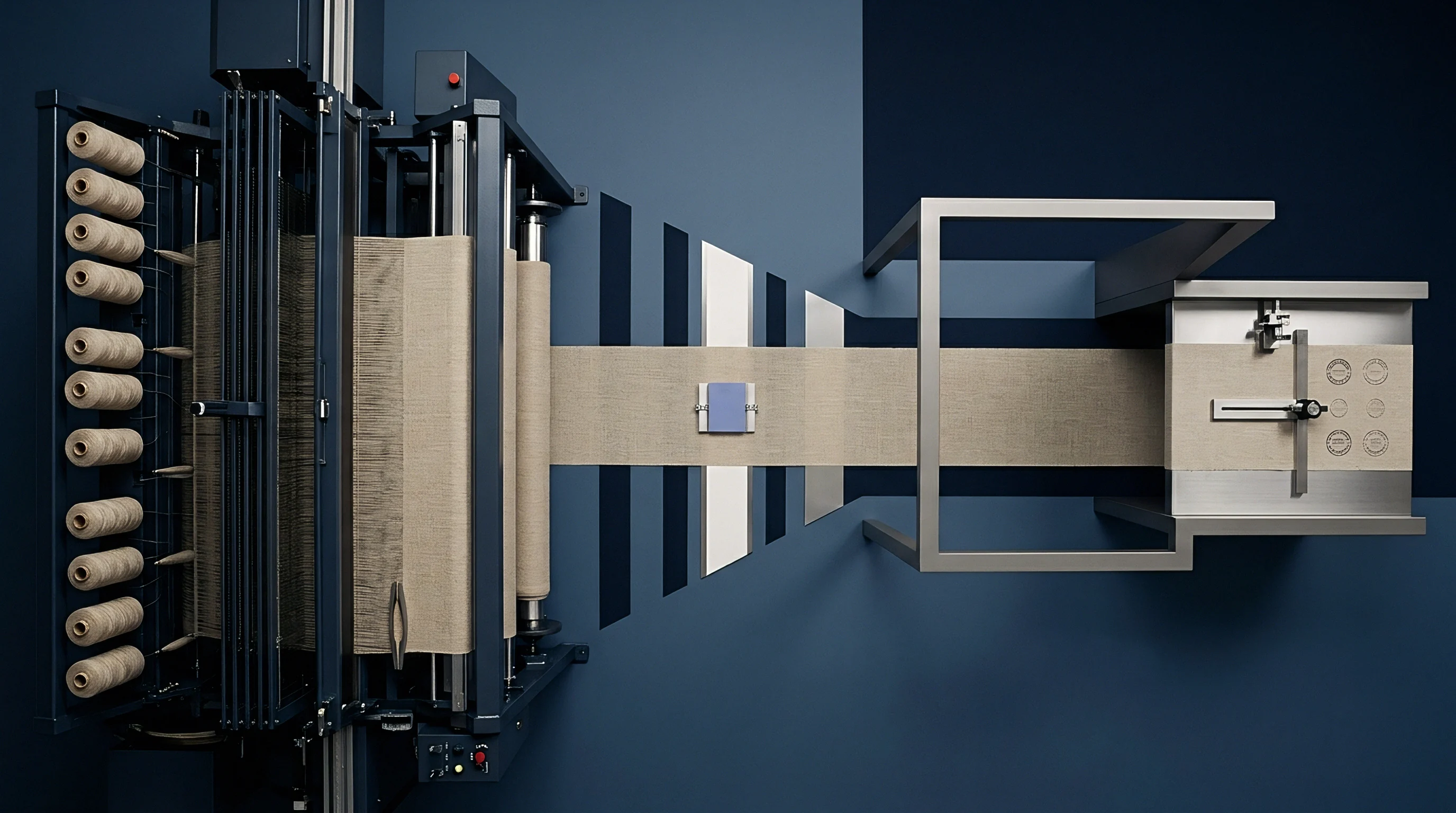
Applied dry solids govern yarn abrasion resistance in the shed, but moisture control dictates actual runnability. Over-drying the sized warp sheet destroys the elasticity of both the size polymer and the flax fiber. Drying cylinders run on graduated steam pressures: 1.5 bar on the first cylinder, 2.8 bar across the middle set, and 0.8 bar at the exit drum.
The delivered sheet requires a residual moisture content between 7.5 percent and 8.5 percent; drying below 6.5 percent turns natural pectins into an unyielding matrix, causing yarns to shatter at loom start-up.
Preparation managers apply an established sequence to mix and qualify sizing recipes:
- Charge the cooking vessel with sixty percent total cold soft water and initiate high-shear mechanical agitation.
- Disperse powdered starches and polyvinyl alcohol uniformly to avoid unhydrated lump formation within the suspension.
- Inject live steam to elevate bath temperature to ninety-five degrees Celsius, maintaining this plateau for twenty-five minutes.
- Add melted lubricating waxes and auxiliary anti-static compounds ten minutes prior to cooking cycle completion.
- Dilute with heated process water to final volume, testing refractometer Brix readings against the target specification.
Fluctuating water hardness causes uneven desizing performance whenever water treatment systems fail to suppress dissolved magnesium ions.

Cylinder
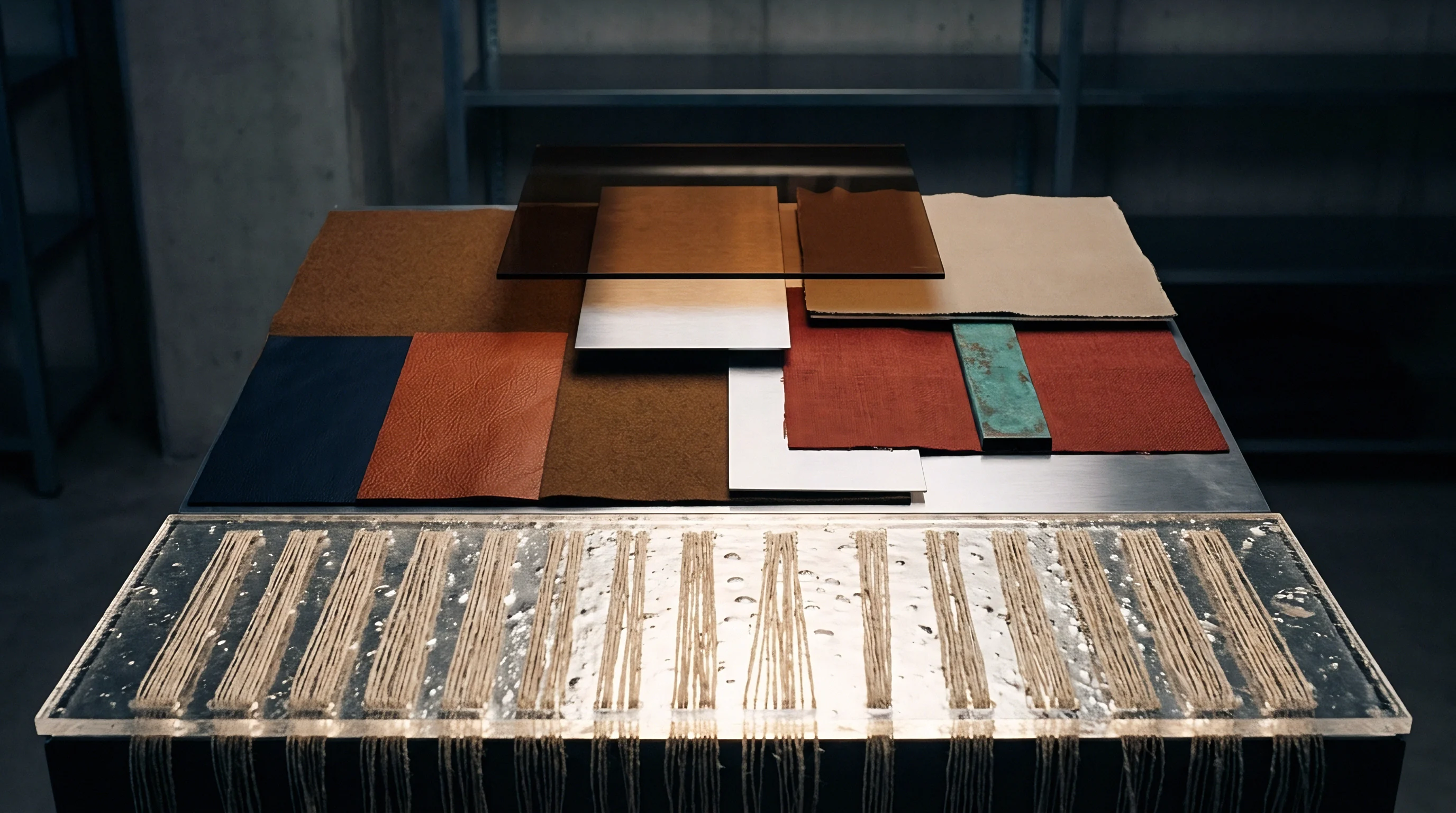
Sectional winding drums require precise traverse pitch calibration to avoid ridging along the flange. Because linen pairs a high Young modulus with low elasticity, a warp beam wound with unequal section bands develops sharp tension gradients from selvedge to center. In dense fabrics, a one percent variance in warp tension produces visible optical banding across the width.
These warp stripes or reed shadows cannot be corrected during scouring, bleaching, or mercerization. The drum cone angle sets the foundation for density stability across thirty-five hundred ends.
Differential winding circumference on conical sections induces cross-sheet slackness that beats into loose picks.
Drum winding speeds for pure flax warps remain restricted to three hundred to four hundred meters per minute, whereas cotton tolerates eight hundred meters per minute without thermal damage. Excess speed heats yarn guides, softening the sizing film and stripping loose fibrils from the core. Centrifugal force pushes the dense ribbons outward along the drum incline, altering packing geometry; if the reed traverse pitch fails to match the buildup thickness per revolution, the ribbons overlap and crush adjacent ends.
Can Sectional Warping Prevent Linen Selvedge Slackness?
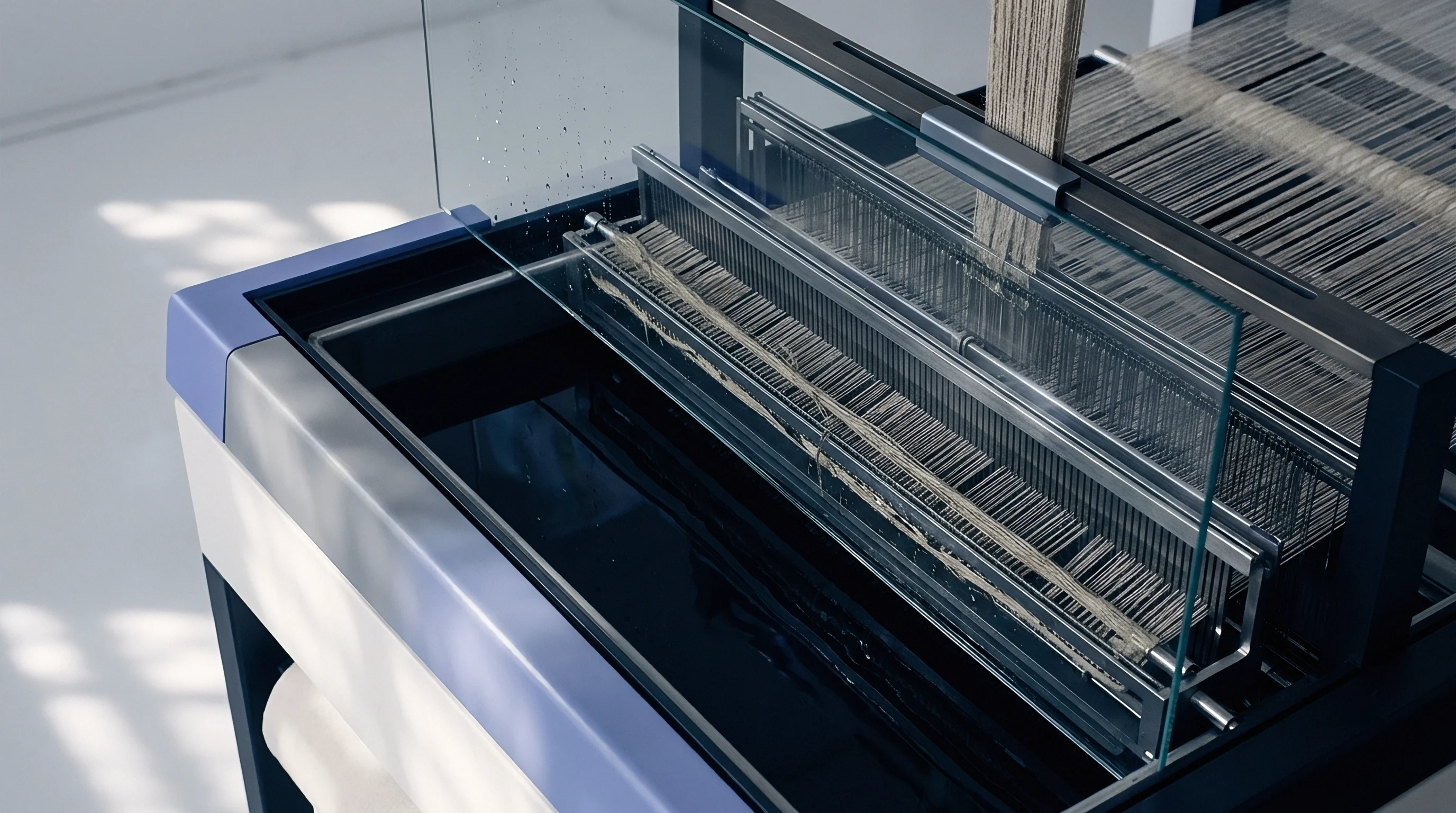
Setting the drum cone angle equal to the yarn buildup angle stabilizes ribbon edges during high-density flax beaming. Standard steep cone angles of eleven degrees, designed for synthetics, cause linen sheets to collapse down the incline, whereas shallow angles between five and seven degrees support the rigid bast yarn. Sectional warpers rely on laser-guided optical measuring bars to track yarn buildup thickness on the initial band.
- Optical displacement scanners map radial thread thickness across the first ribbon, automatically indexing carriage lateral feed rates.
- Pneumatic section band clamps secure identical ribbon widths across both left and right selvedge borders.
- Constant linear speed controls adjust drum rotation speed to ensure unchanging yarn arrival velocity as the winding diameter expands.
- Synchronized reverse beaming drives transfer the complete sheet onto the loom beam under tension regulation exceeding five thousand Newtons.

Band Width and Traverse Indexing
Reed calculations establish lateral carriage displacement for each drum revolution. The traverse feed rate is the product of yarn diameter, packing coefficient, and ends per centimeter. For an eighty-lea flax yarn carrying nine percent size add-on, theoretical yarn diameter settles at 0.145 millimeters, which yields a carriage feed of 0.28 millimeters per drum rotation in a high-density reed.
| Metric Yarn Count | Ends per Centimeter | Drum Cone Angle | Carriage Traverse (mm/rev) | Beaming Tension (N/m) |
|---|---|---|---|---|
| Nm 18 (56 tex) | 24.0 | 5° 40′ | 0.385 | 1400 |
| Nm 24 (41 tex) | 28.0 | 6° 00′ | 0.315 | 1650 |
| Nm 30 (33 tex) | 32.0 | 6° 40′ | 0.265 | 1850 |
| Nm 36 (28 tex) | 36.0 | 7° 10′ | 0.220 | 2100 |
| Nm 48 (21 tex) | 42.0 | 7° 30′ | 0.175 | 2400 |
Reversing the wound sheet onto the final loom beam places severe mechanical strain on sized linen ends. Winding tension must be balanced against beam hardness: insufficient tension allows outer coils to wedge into lower layers during let-off, while excessive tension breaks fibers within the core and degrades greige tensile strength. Target beam hardness sits between eighty-two and eighty-six Shore D units across the full barrel length.
Whether automatic section-tension compensators can fully offset yarn humidity loss during three-day weekend holds remains an unresolved question across commission prep houses.
Split
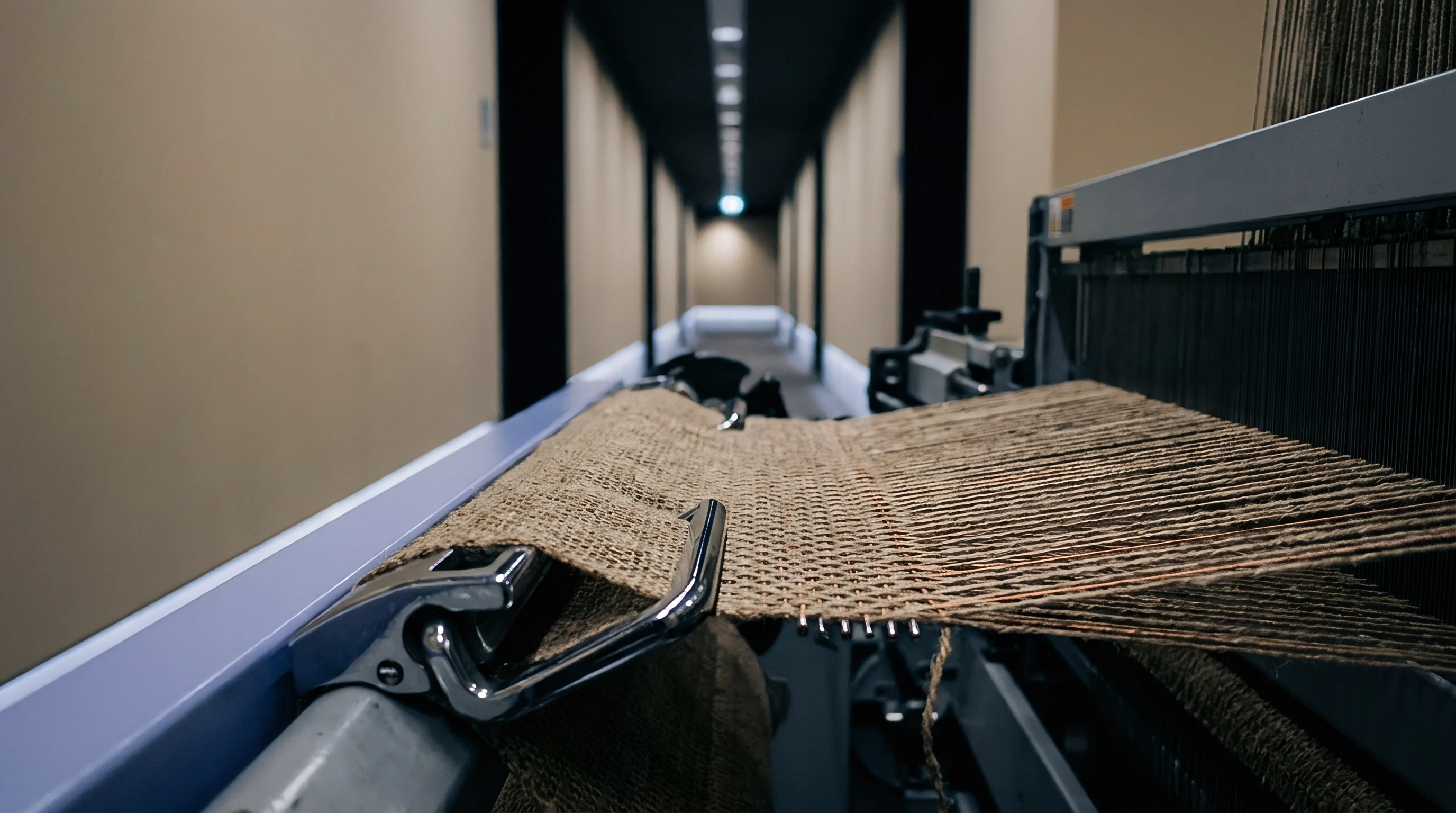
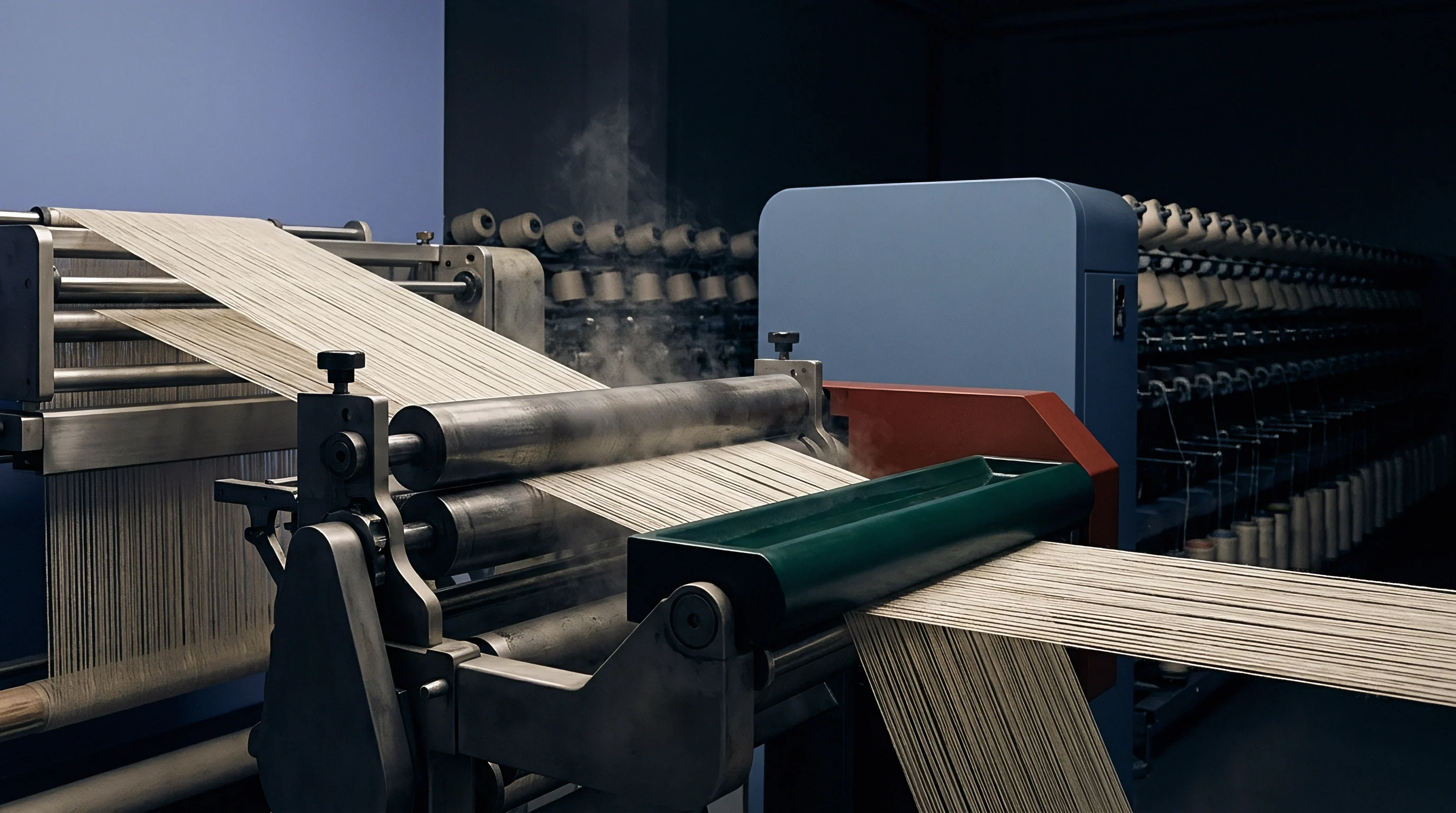
Dried warp sheets emerging from the cylinder stack form a solid web bonded by amylose bridges. Separating these ends requires mechanical division before the sheet reaches the headstock comb. While cotton flexes during separation, flax shears at the cell walls; aggressive splitting tears outer fibrils away from the core and creates excessive hairiness that fouls drop wires and causes micro-stops.
Lease splitting relies on multi-tier chrome rods positioned downstream of the drying units. An eighty-end-per-centimeter warp sheet divides across eight separate planes on successive lease bars, reducing peeling tension to under five centinewtons per end. Dividing across only two zones damages the size coating, increasing shed dust by four hundred percent.
Cold lease splitting breaks the size film while warm rod separation preserves yarn encapsulation.
Static chrome bars scuff the dry warp sheet. Oscillating or rotating lease bars match the line speed of the moving sheet to eliminate friction. For high-density linen, rods require a polished surface roughness Ra below 0.1 microns to prevent hard sizing from pulling adjacent ends apart unevenly.
Lease Rod Spacing and Angle Geometry
Alternating chrome-plated bars break starch bonds between neighboring yarns without tearing primary bast fibers. Horizontal spacing between successive lease rods must exceed four hundred millimeters; tighter spacing forces acute division angles beyond fifteen degrees, which shear surface fibrils and expose raw cellulose to reed abrasion. A shallower division angle of six to eight degrees peels bonds along the yarn axis and keeps the sizing coat intact.
Rod diameters scale inversely with warp density. Dense sets at forty ends per centimeter use sixteen-millimeter rods for initial splitting, tapering to twelve-millimeter bars for final separation. Heavier rods crush the dry size crust into brittle micro-flakes.

Will Liquid Lubricants Suppress Flax Fibrillation?
Applying melted paraffin wax at the kiss roll coats protruding fibrils before final winding, with target add-on rates between 0.5 percent and 1.0 percent by yarn weight. Water-emulsifiable synthetic lubricants often replace natural waxes in dense sets to avoid scouring residues during wet finishing.
Reeds cycling at four hundred picks per minute generate rapid friction reversals against individual ends. Lubricant application drops the coefficient of friction against the reed dent from 0.32 to 0.16, mitigating heat buildup. Over-lubricating softens the size film and leaves sticky deposits inside heald eyes; a properly balanced wax film hardens within three seconds of contact to shield the bast bundle.
Excessive splitting tension strips the size shell while gentle rod zoning preserves yarn integrity.

Booking
Shed capacity planning relies on projected stops per hundred thousand picks. High-density linen woven at fifty picks per centimeter on three-hundred-centimeter rapier frames runs sixty thousand picks per hour at five hundred picks per minute. At ninety percent efficiency, one machine yields 10.8 meters of greige cloth hourly.
An unoptimized preparation sequence raises stoppage rates from two stops per hundred thousand picks to seven, dropping efficiency to seventy-four percent and output to 8.8 meters.
The resulting downtime shows up directly in landed costs. Modern wide electronic dobby rapier looms operate at roughly thirty-five euros per machine hour across depreciation, labor, climate control, and power. That efficiency drop from ninety down to seventy-four percent inflates transformation costs from 3.24 euros to 3.97 euros per linear meter, adding seventy-three euro cents per meter in margin drag before factoring in mending labor.
Because wet-spun flax lacks natural elasticity and forms a dense bundle, tight selvages and heavy harness motion quickly cause edge breakouts, penalizing prep shortcuts at the loom.
Efficiency Metrics and Machine Allocation
High-sett linen running at four hundred picks per minute requires strict stoppage limits to maintain margin. Warp faults leave clear diagnostic signatures on loom monitoring systems: dropper stops point to poor encapsulation or rough lease splitting, while breaks between heald frames and the beat-up line reflect insufficient elasticity or uneven warping tension. Size solids, lease geometry, and sectional cone angles establish these outcomes well before beams reach the loom.
| Warp Prep Standard | Warp Stops / 100k Picks | Loom Running Efficiency | Greige Output (Meters/Hour) | Total Loom Hours Required | Weaving Cost per Meter (€) |
|---|---|---|---|---|---|
| Unoptimized Native Sizing | 8.5 | 68.5% | 8.22 | 1216.5 | 4.26 |
| Standard Industrial Sizing | 4.8 | 79.2% | 9.50 | 1052.6 | 3.68 |
| High-Density Synthetic Blend | 2.8 | 86.4% | 10.36 | 965.2 | 3.38 |
| Laser-Monitored Preparation | 1.6 | 91.2% | 10.94 | 914.0 | 3.20 |
| Precision Preparation Baseline | 1.1 | 93.5% | 11.22 | 891.2 | 3.12 |
| Data baseline assumes 50 picks/cm, 300 cm reed width, 500 ppm rapier loom at €35.00/machine hour operating cost. | |||||
Landed Yardage Economics
Commercial evaluations balance breakage penalties against raw beam preparation surcharges. Commodity preparation facilities charge sixty euro cents per kilogram for sizing on high-speed drums without laser thickness controls or multi-tier splitting. Specialty mills charge 1.45 euros per kilogram using precision sectional warping and tailored modified-starch formulations.
On a ten-thousand-meter order of sixty-lea warp, that preparation differential amounts to twenty-eight hundred euros.
The unoptimized beam introduces sixty-eight hours of loom downtime, twenty-four hundred extra knotting stops, and a 4.2 percent rise in mending room scrap. Under ASTM D5430 Four-Point inspection, defects downgrade seven hundred meters to second quality at a five-euro-per-meter markdown. The initial saving on preparation is erased, resulting in a net loss of thirty-five hundred euros on the run.
Commercial contracts enforcing ISO 7211 construction tolerances establish that warp break rates exceeding 2.5 stops per hundred thousand picks authorize the buyer to deduct machine downtime charges directly from the finished greige invoice.