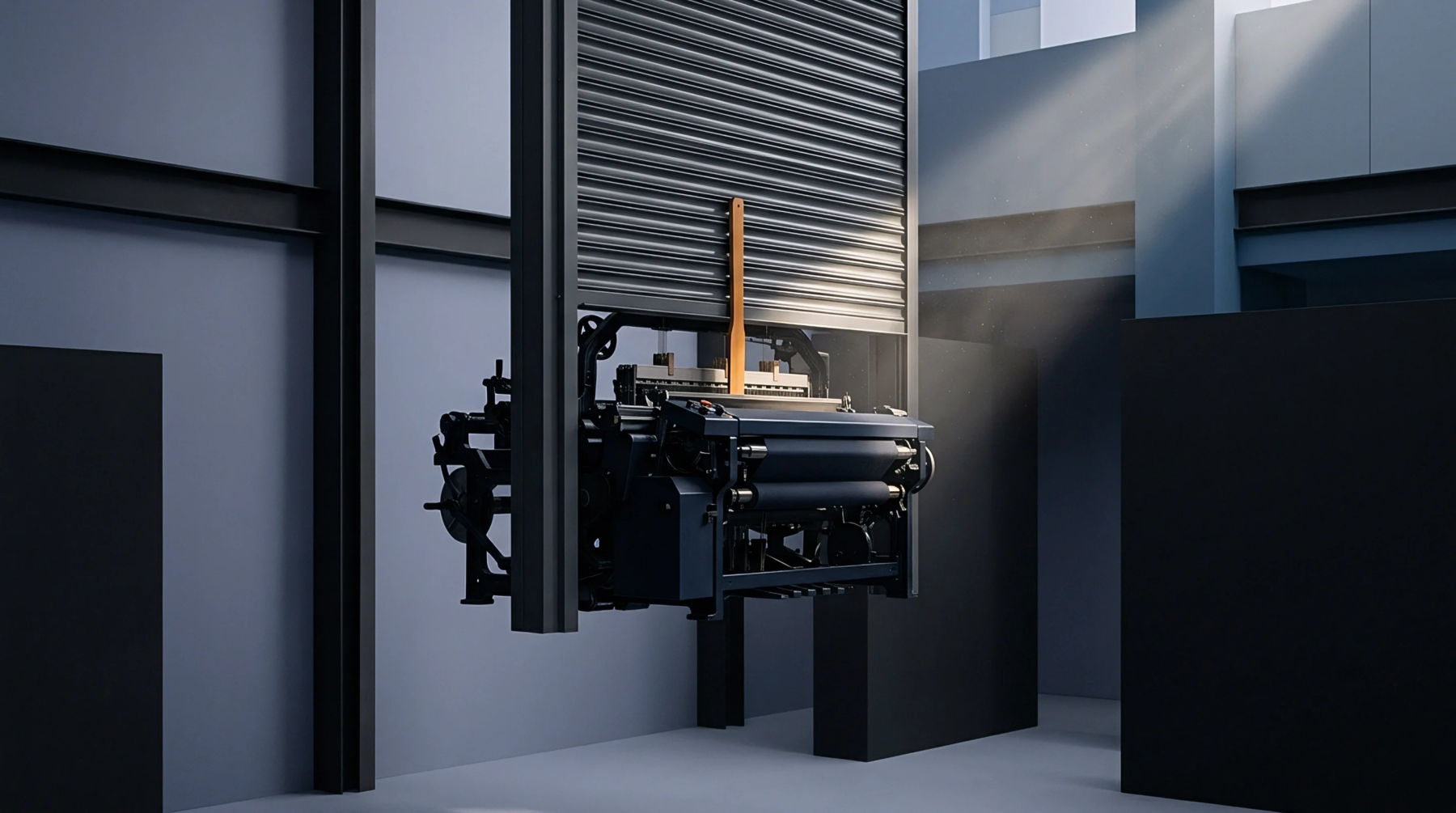
Structural Frame
Heavy structural frames in modern weaving machines support the high-speed moving parts and withstand the forces of the beat-up action. The rapier chassis comprises this cast-iron or steel support structure, housing the drive gears, main motor, and crankshafts that power the rapier ribbons. It provides the rigid baseline needed to keep all mechanical components in alignment during continuous operation.
This structural rigidity is essential for maintaining uniform fabric quality over millions of cycles.
Vibration Absorption
High beat-up speeds and the rapid stroke of the weft insertion mechanisms generate intense dynamic forces that can destabilize the loom. The design of the rapier chassis minimizes these vibrations by using heavy-duty cast components that act as a mechanical dampener. In linen weaving, where the coarse yarns require exceptionally high beat-up force to achieve the desired density, this dampening capacity prevents the misalignments that lead to pick variations.
Rigid structural mountings also protect the sensitive electronic control units and the warp let-off sensors from vibrational wear. By securing the drive mechanisms in a stable environment, the frame reduces the wear rate of the gears and rapier bands.
Operational Stability
Alignment of the reed and the rapier guides relies on the dimensional stability of this base frame over decades of service. A robust rapier chassis prevents the twisting or flexing that occurs when the loom runs at speeds exceeding five hundred picks per minute. This physical resistance to deformation ensures that the left and right rapier heads meet at the exact center of the shed.
This precision prevents yarn damage and maintains a high running efficiency.