
Flax Fiber Chemical Composition and Basic Retting Quality Evaluation
Optimal retting reduces residual pectin below 1.8 percent, allowing ultimate fiber separation to 3 tex and maximizing high-count line yarn yield.
Optimal retting reduces residual pectin below 1.8 percent, allowing ultimate fiber separation to 3 tex and maximizing high-count line yarn yield.

Verify dry mass through oven desiccation at 105C and apply a 12% moisture regain formula to protect mill yield and block transit water charges.

Gravimetric extraction combined with stable isotope profiling verifies European dew-retted flax origin and detects blended Asian mill yarn batches.

Bleached European linen yarns require chemical alpha-cellulose isolation and fractionation calibration to verify isotopic origin against raw fiber isoscapes.

Multi-isotope mapping of strontium and oxygen provides an empirical origin gate that exposes commingled or substituted linen independent of paperwork claims.

Reconciling organic flax spinning losses requires adjusting transaction certificates for count-dependent extractive solubilization and moisture regain.

Customs flax blend tolerances rely on statutory 3% variance margins adjusted for standard moisture regain factors under ISO 1833 chemical testing.
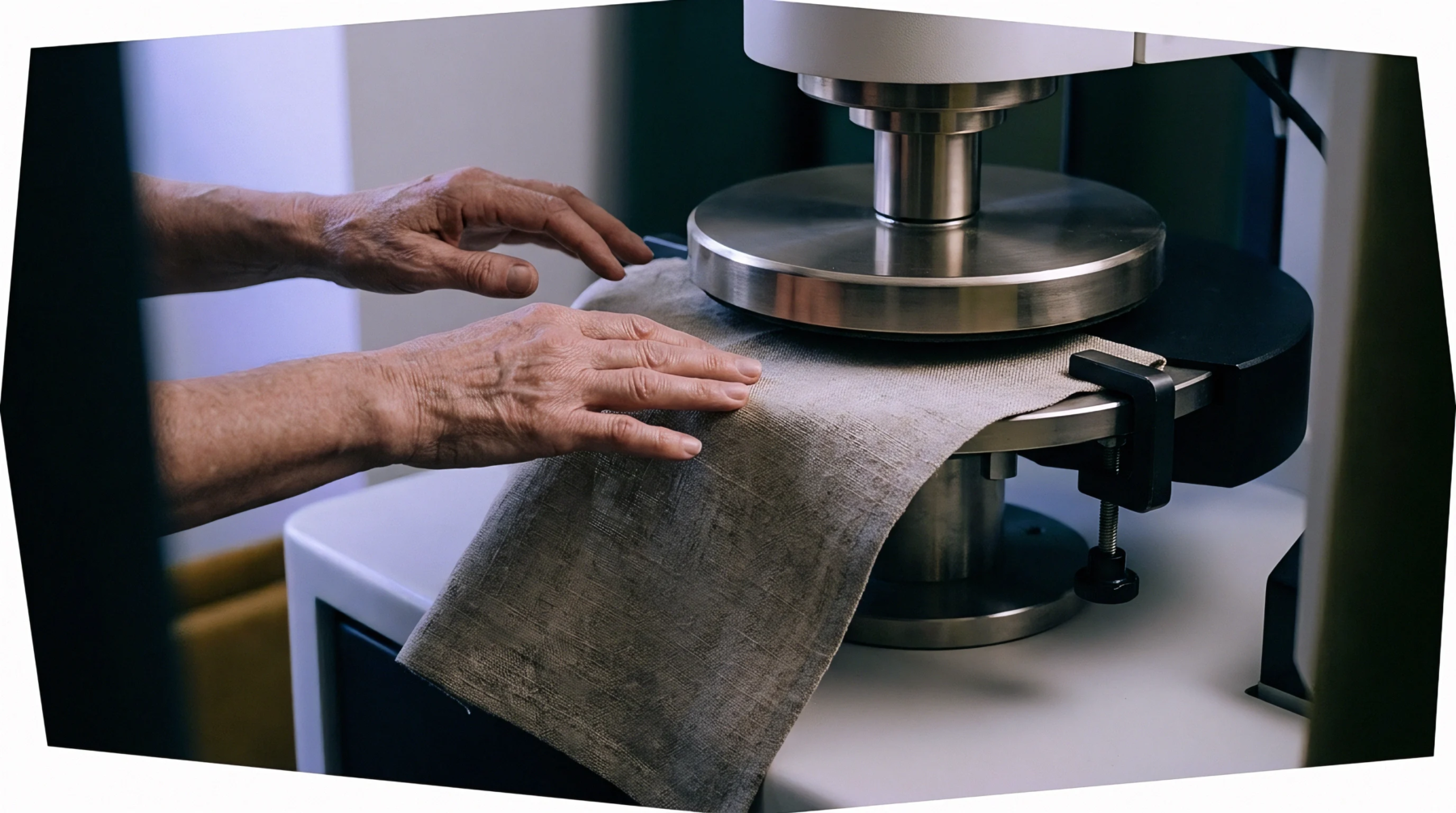
Gravimetric oven drying co-volatilizes applied fiber lubricants, requiring headspace GC-MS corrections to prevent artificial mass loss during dry mass determination.

Forensic microscopy quantifies chemical degumming residues on bast fibers via cell wall swelling ratios, stereological grid counts, and reagent micro-staining.
Reconciling yarn commercial weight requires subtracting extracted chemical finish mass from oven-dry weight before applying standard moisture regain factors.

Cross border flax roving settlements adjust gross package mass to bone dry fiber weight using standardized oven desiccation and contractual regain factors.

Quantifying epicuticular wax mass fractions in dew-retted line flax bales isolates true fiber yield and optimizes wet-spinning boundary lubrication parameters.

Stable isotope ratio mass spectrometry validates European flax origin by measuring precipitation carbon and soil strontium signatures directly from fabric cellulose.

Bayesian isoscape analysis of multi-isotope ratios quantifies geographic constituent proportions in commingled yarn lots to catch fraudulent origin claims.

Resolving gravimetric fineness disputes requires ISO 2370 extraction standards, n=50 bundle sample sizes, and contracted metric number tolerance bands.

Controlled chemical matrix extraction and continuous moisture regain balance lower dynamic friction, preventing warp breaks during high speed linen warping.
Importers resolve customs fiber discrepancies by adjusting laboratory solvent dissolution dry mass with standard commercial moisture regain factors.

Harmonized System Chapter 53 classification of flax fabrics relies on an 85 percent mass threshold verified through dry-weight chemical analysis.

Auditing wet spinning bath dissolution losses requires continuous tracking of trough temperature, pH, and dissolved solids to correct dry mass yield balances.

Controlling flax sliver non-cellulosic residue below 2.5 percent eliminates drafting stick-slip force spikes and holds wet-spun yarn air permeability variance under eight percent.
Expertise is a utility, not a secret. sentiention™ publishes its working knowledge as open reference: intelligence layer covering the materials it sources, the markets it enters, and the reference that serves both.