
Raw Flax Weight Ticket Audit in Scutching Plant Intake
Auditing scutching intake tickets requires verifying axle scale calibration, applying standardized moisture and dockage deductions, and reconciling net straw mass.
Auditing scutching intake tickets requires verifying axle scale calibration, applying standardized moisture and dockage deductions, and reconciling net straw mass.
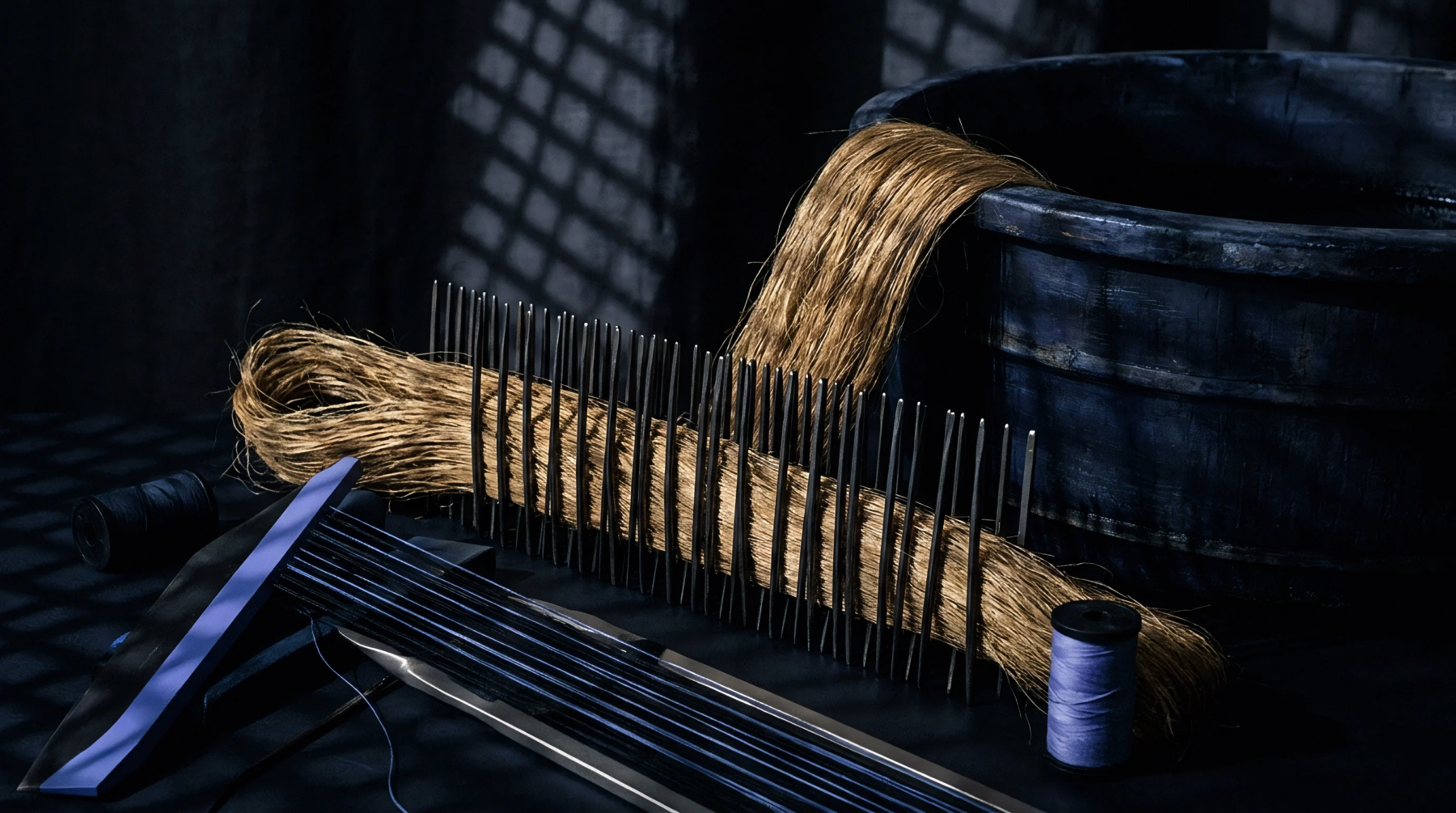
Optimizing hackle pin shear stress below 18 MPa splits pectin lamellae cleanly, maximizing fine line yield while preventing elementary fibre micro-fractures.
Optimizing hackling pin density and wet-spinning trough temperature stabilizes draft forces, reducing bast yarn end breakage below fifteen breaks per thousand spindle hours.

Heat and drought lower flax middle lamella pectin shear strength, reducing hackling long-line yield and dropping wet-spinning count caps from Nm 39 to Nm 26.

Controlled pectin removal enables clean bundle cleavage, elevating metric fibre fineness above Nm 2000 while maintaining long line yield above 60 percent.
Commercial mass calculations based on ISO 6741 oven-drying protocols protect buyers from paying landed mass prices on sea-transit moisture uptake in flax.

Non-cellulosic content above 3.5% lowers hackling line yield, increasing tow waste and landed line fibre cost per finished metre.
Expertise is a utility, not a secret. sentiention™ publishes its working knowledge as open reference: intelligence layer covering the materials it sources, the markets it enters, and the reference that serves both.