Standard Linen Yarn Tensile Specifications for Weaving Preparation
Wet-spun linen warps demand a minimum tenacity of 18.5 cN/tex with under 1.2% beaming stretch to maintain loom stop rates below 1.5 per 100,000 picks.

Load
Woven cloth performance depends directly on how single flax strands handle cyclic multi-axial strain. Because flax fibers have a highly crystalline cellulosic structure with a steep initial modulus, linen is exceptionally strong but unforgiving under sudden impact. During sectional warping, beaming, and shedding, yarn strength dictates whether a warp runs continuously or stalls the loom.
Meeting target weaving efficiency means setting firm tensile benchmarks before yarn packages ever reach the creel.
Tensile Thresholds for Wet Spun and Dry Spun Flax Yarns
The spinning method dictates how ultimate cellulosic fibrils align inside the yarn bundle. Wet-spun linen uses hot water to soften inter-fiber pectin during drafting, yielding smooth, consolidated yarns with tight fiber orientation. Dry-spun linen instead relies on mechanical drafting of tow fibers, creating a bulkier structure with greater linear mass variation and lower packing density.
While wet flax gains tensile strength when hydrated, dry-spun yarns show broader elongation variance.
A wet-spun 100 percent linen warp yarn of Nm 39 demands a minimum single-yarn tenacity of 18.5 cN/tex at a breaking elongation above 2.8 percent under standard atmospheric conditions, whereas dry tow yarns break earlier. When tenacity in wet-spun warp quality drops below 15.0 cN/tex, end-break rates during shedding climb non-linearly. To keep local weak spots from shutting down the shed, the breaking force coefficient of variation must stay under 14.0 percent across a ten-bobbin test sample.
A wet-spun 100 percent linen warp yarn of Nm 39 demands a minimum single-yarn tenacity of 18.5 cN/tex at a breaking elongation above 2.8 percent under ISO 2062 standard atmosphere.
Work-to-break values give a more complete picture of yarn toughness than peak breaking force alone. Calculated as the area under the force-elongation curve, work-to-break measures the energy a yarn absorbs before it ruptures. High tenacity paired with poor elongation produces a brittle yarn that snaps under peak beat-up loads.
| Yarn Type | Count Range (Nm) | Linear Mass (tex) | Min Tenacity (cN/tex) | Min Elongation (%) | Max Tenacity CV (%) |
|---|---|---|---|---|---|
| Wet-Spun Long Flax | Nm 26 – Nm 60 | 38.5 – 16.6 | 18.5 – 24.0 | 2.5 – 3.2 | 12.5 – 14.0 |
| Wet-Spun Tow Flax | Nm 14 – Nm 26 | 71.4 – 38.5 | 15.0 – 18.0 | 2.2 – 2.8 | 14.0 – 16.0 |
| Dry-Spun Tow Flax | Nm 9.6 – Nm 18 | 104.0 – 55.5 | 11.0 – 14.5 | 1.5 – 2.2 | 16.0 – 20.0 |
Yarn Failure Mechanisms under Preparation Stress
Preparation processes subject yarn packages to sustained tensile drag and sharp acceleration. Unwinding from bobbins creates ballooning stress, while guide eyes introduce localized frictional shear. Recognizing specific failure modes allows for targeted process adjustments.
- Slub-induced Tensile Snap occurs when thick yarn defects catch in tensioner discs, spiking localized stress beyond single-end breaking force.
- Pectin Slip Rupture develops in under-boiled or poorly retted flax where weak inter-fiber adhesion allows ultimate fibers to slide past one another without actual fiber fracture.
- Brittle Cleavage Breakage results when over-dried linen yarn lacks standard moisture regain, giving way under low elongation strain before reaching nominal breaking load.
- Frictional Shear Abrasion appears as surface fiber stripping at ceramic guides, rolling loose fibers into slubs that wedge inside the reed during weaving.
Substandard single-yarn tenacity or high breaking force variance across creel packages causes frequent end breaks during sectional warping. This inflates warp beam set-up time and leaves physical knot defects that cut loom output by four to seven percent.

Creel
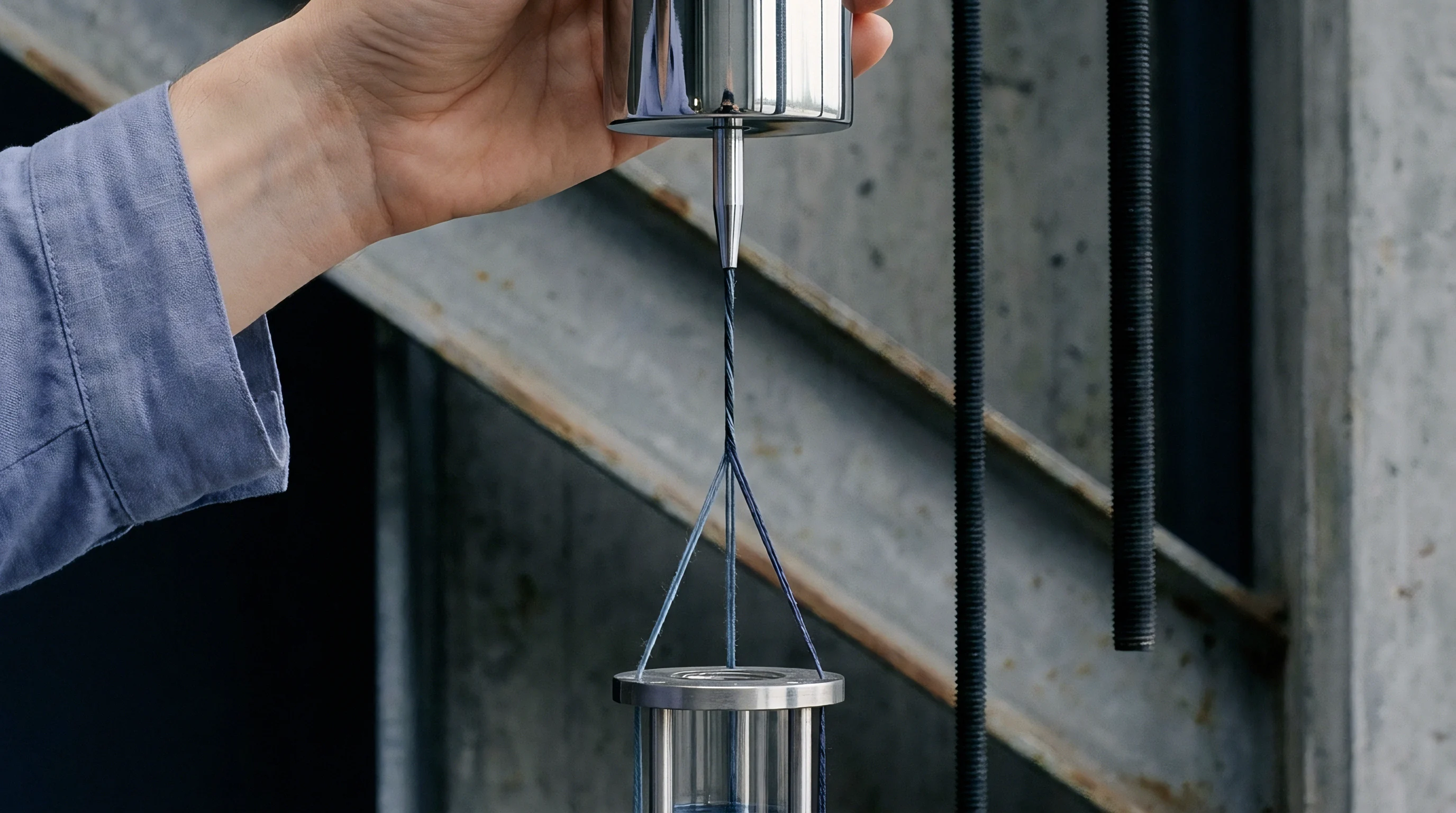
Sectional warping places severe frictional stress on unwinding packages, so tension discs must be calibrated precisely to prevent pre-stretch damage. Unwinding speeds between 250 and 450 meters per minute create dynamic tension fluctuations that interact directly with package geometry. Keeping sheet tension uniform across every end entering the lease reed is what ensures consistent warp beam density.
Unwinding Dynamics and Frictional Coefficient Control
Yarn running across guide eyes generates static electricity and mechanical drag. Linen yarn has a static coefficient of friction against smooth ceramic surfaces ranging between 0.22 and 0.28, though accumulated surface waxes or flax dust raise this figure significantly. Tension grows exponentially with contact angle according to the Capstan equation, where tension after a guide equals initial tension multiplied by Euler’s number raised to the power of the friction coefficient times wrap angle in radians.
Spring-loaded tension units must apply precise pinching force without abrading the hairy surface of dry-spun strands. Loose flax micro-dust accumulating beneath tension discs creates variable pinching pressure, shifting individual end tension by up to thirty percent across the width of the warping creel.
Tensioner settings above the intrinsic elastic limit of flax cause permanent yarn deformation before sizing fluid contacts the fiber.
Creel tensioners require individual calibration. Balancing unwinding tension between outer and inner package rows prevents section length discrepancies during lease insertion, which would otherwise leave loose ends on the weaver’s beam and cause severe shedding entanglements.
Pre-Stretch Prevention and Beam Density Uniformity
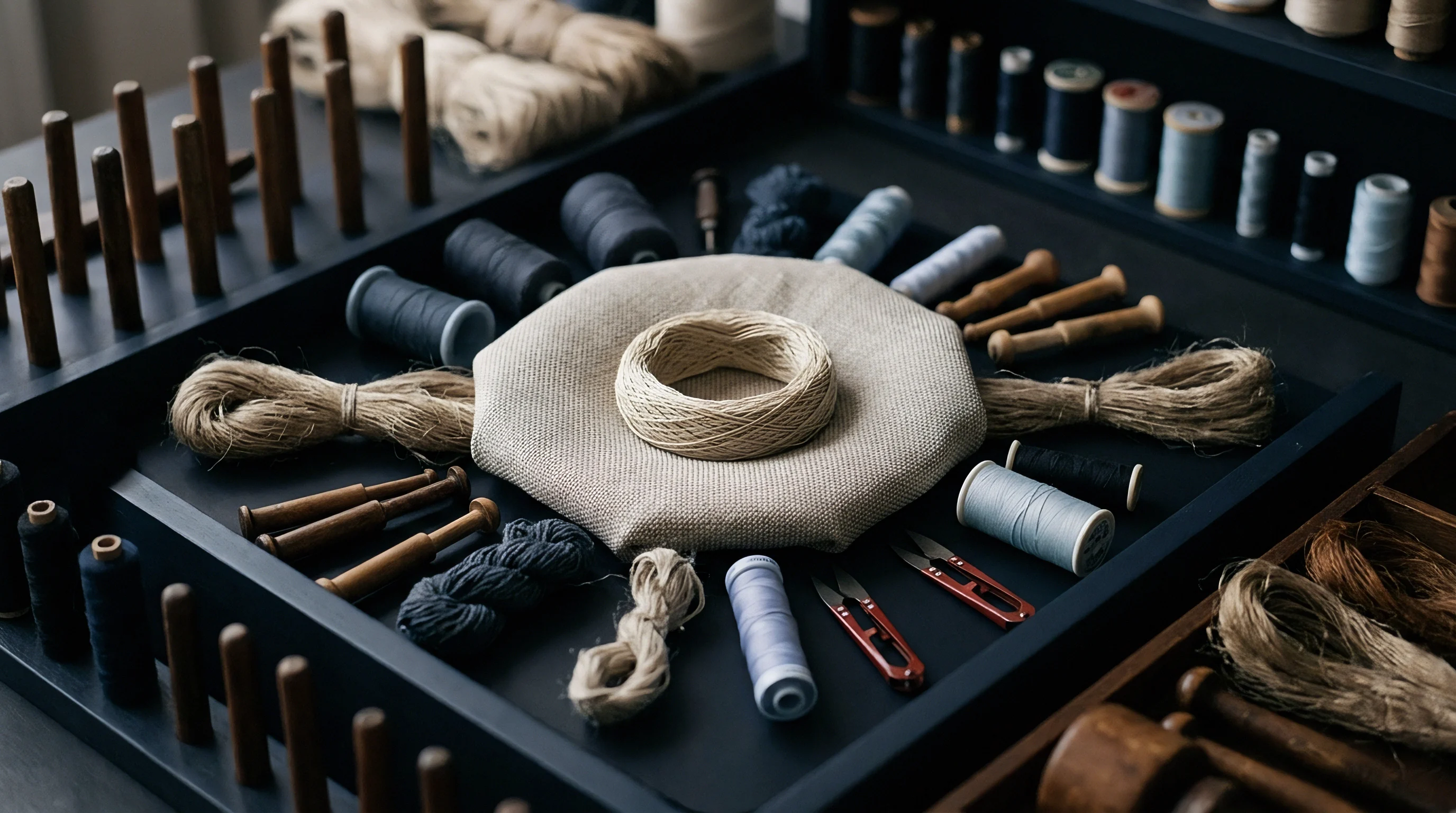
Linen has a narrow plastic deformation range before permanent structural damage occurs. Subjecting a wet-spun flax yarn with 2.8 percent breaking elongation to a warping tension above 1.2 cN/tex induces permanent pre-stretch, stripping its elastic reserve before the yarn ever hits the sizing bath.
- Evaluation of Unwinding Balloon Height to ensure package-to-guide distance equals twice package length, minimizing balloon tension peaks during high-speed delivery.
- Calibration of Individual Compensating Discs using a continuous digital tension meter across twenty random ends per creel wing to confirm thread tension stays within 0.3 cN/tex of baseline.
- Cleaning Schedule for Ceramic Guide Arrays using compressed air blasts every four beam cycles to remove accumulated pectin scale and short fiber lint.
- Verification of Sectional Warping Drum Angle to match the exact yarn build slope, preventing edge collapse during lateral traverse movements.
Low beam efficiency often stems from package winding density variation rather than atmospheric humidity fluctuations.

Draft
Sizing applied in the slasher bath reinforces the yarn core, bonding loose surface ultimate fibers so they can withstand abrasive loom stress. The protective film caps hairiness and improves tensile strength while sacrificing a small fraction of elongation. Managing stretch percentage during beaming is the most sensitive control parameter in linen warp preparation.
Slasher Sizing Formulations and Elasticity Retention
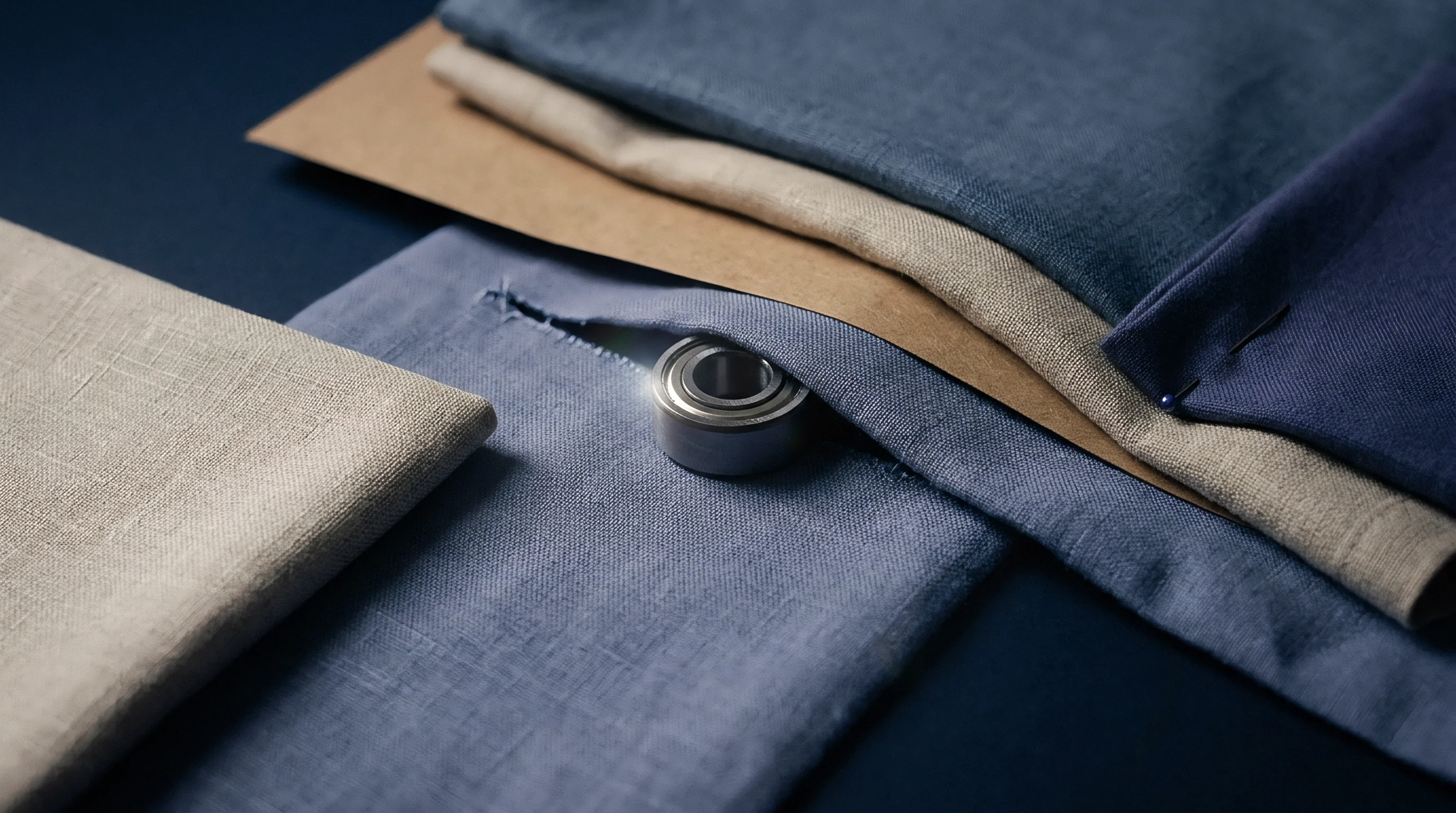
Starch cooked with synthetic binders forms a protective film around single end bundles. Modified potato starches, carboxymethyl cellulose (CMC), and polyvinyl alcohol (PVA) serve as primary film formers for linen; native starches lack the elasticity needed for thin-film coating and shed heavily under reed impact. Tallow or synthetic wax lubricants lower friction coefficients so adjacent warp threads slide smoothly without clinging.
Sizing increases dry yarn tenacity by ten to twenty-five percent depending on pick-up level and formulation concentration. Size pick-up for wet-spun long flax averages eight to twelve percent, whereas dry-spun tow warps require twelve to sixteen percent to encapsulate protruding fiber ends.
| Flax Processing Method | Target Size Pick-Up (%) | Slasher Speed (m/min) | Slasher Box Temp (°C) | Max Allowable Stretch (%) | Target Moisture Regain (%) |
|---|---|---|---|---|---|
| Wet-Spun Long Flax (Nm 26-60) | 8.0 – 11.0 | 35 – 55 | 82 – 88 | 0.8 – 1.2 | 9.0 – 11.0 |
| Wet-Spun Tow Flax (Nm 14-26) | 10.0 – 13.0 | 30 – 45 | 85 – 90 | 1.0 – 1.4 | 9.5 – 11.5 |
| Dry-Spun Tow Flax (Nm 9.6-18) | 12.0 – 16.0 | 20 – 35 | 88 – 93 | 1.2 – 1.5 | 10.0 – 12.0 |
Beaming Stretch Control and Creep Recovery
Wet yarn in the sizing trough becomes plastic and deforms under minimal draft. Any excess tension between squeeze rolls and drying cylinders permanently elongates the damp flax. Because linen lacks the spring-back elasticity of wool or textured synthetics, beaming stretch directly reduces residual breaking elongation.
Keeping stretch under 1.2 percent on wet-spun warps preserves the elongation reserve needed during shed opening.
- Immerse warp sheets in a size bath maintained strictly between 85°C and 90°C to ensure constant viscosity and uniform liquor penetration.
- Adjust pneumatic squeeze roller pressure to achieve target wet pick-up without forcing size completely into the yarn core, preserving core flexibility.
- Regulate tension zones across drying cylinders using driven multi-motor drives synchronized with true yarn speed sensors.
- Monitor moisture content at the headstock using high-frequency microwave sensors to prevent over-drying below 8.5 percent regain.
Warps sized with excessive film hardness shed acrylic flakes into the reed, accelerating wire abrasion and end breaks.
Shed
Peak cyclic stress on the loom occurs during heald frame clearance, when warps diverge to create the insertion tunnel. Rapier and air-jet looms operate at speeds that generate sudden tensile loads, testing yarn elasticity limits. Managing these dynamic tension peaks prevents thread failure during high-speed weaving.

Where Does Tension Spike in High Speed Warping?
Accelerating warp sheets from rest during frame crossover creates severe transient peaks. As heald frames separate to form the shed geometry, warp ends undergo dynamic elongation whose magnitude depends on shed angle, backrest roller position, and weave structure.
Rapier insertion subjects warps to direct impact, while air-jet looms demand near-perfect sizing, as single end breaks stop production. Low elongation heightens sensitivity during shedding. Plain weaves impose higher dynamic loads than twills because every end changes shed position on every pick, driving continuous high-tension cycles.
| Loom Type | Weaving Speed (ppm) | Base Tension (cN/end) | Peak Shed Tension (cN/end) | Max Target Breaks (per 100k picks) |
|---|---|---|---|---|
| Positive Rapier | 350 – 480 | 25 – 35 | 55 – 75 | 1.0 – 1.5 |
| Negative Rapier | 300 – 400 | 20 – 30 | 50 – 65 | 1.2 – 1.8 |
| Air-Jet (Sized Wet-Spun) | 500 – 650 | 15 – 25 | 40 – 55 | 0.8 – 1.2 |
Abrasive Friction and Reed Resistance
Repeated passage of heald eyes and reed wires over sized linen warp ends generates mechanical friction. If the protective size film fails, loose fibers rub against adjacent warp threads and form small fiber clusters known as fuzz-balls. These fuzz-balls prevent clear shed separation, causing rapier heads to strike warp ends and snap multiple threads simultaneously.
Deliveries exceeding a single-yarn tenacity CV of 14 percent trigger automatic rejection under standard linen weaving contracts due to catastrophic loom stop rates.
Maintaining ambient relative humidity between 65 and 70 percent in the weaving shed prevents linen from drying out and losing flexibility. Moist flax fibers absorb impact energy effectively without micro-cracking during beat-up.
Standard purchasing contracts under ISO 13934 include an automatic credit clause for every weaving efficiency drop exceeding three percent below the baseline mill schedule.


Gauge
Laboratory tensile evaluation demands standardized specimen lengths and controlled strain rates to isolate intrinsic fiber tenacity from package winding flaws. Standardized tensile testing provides the baseline data required to qualify incoming yarn lots before committing them to warping. Small variations in gauge length, pull speed, or ambient moisture skew results and generate false compliance readings.
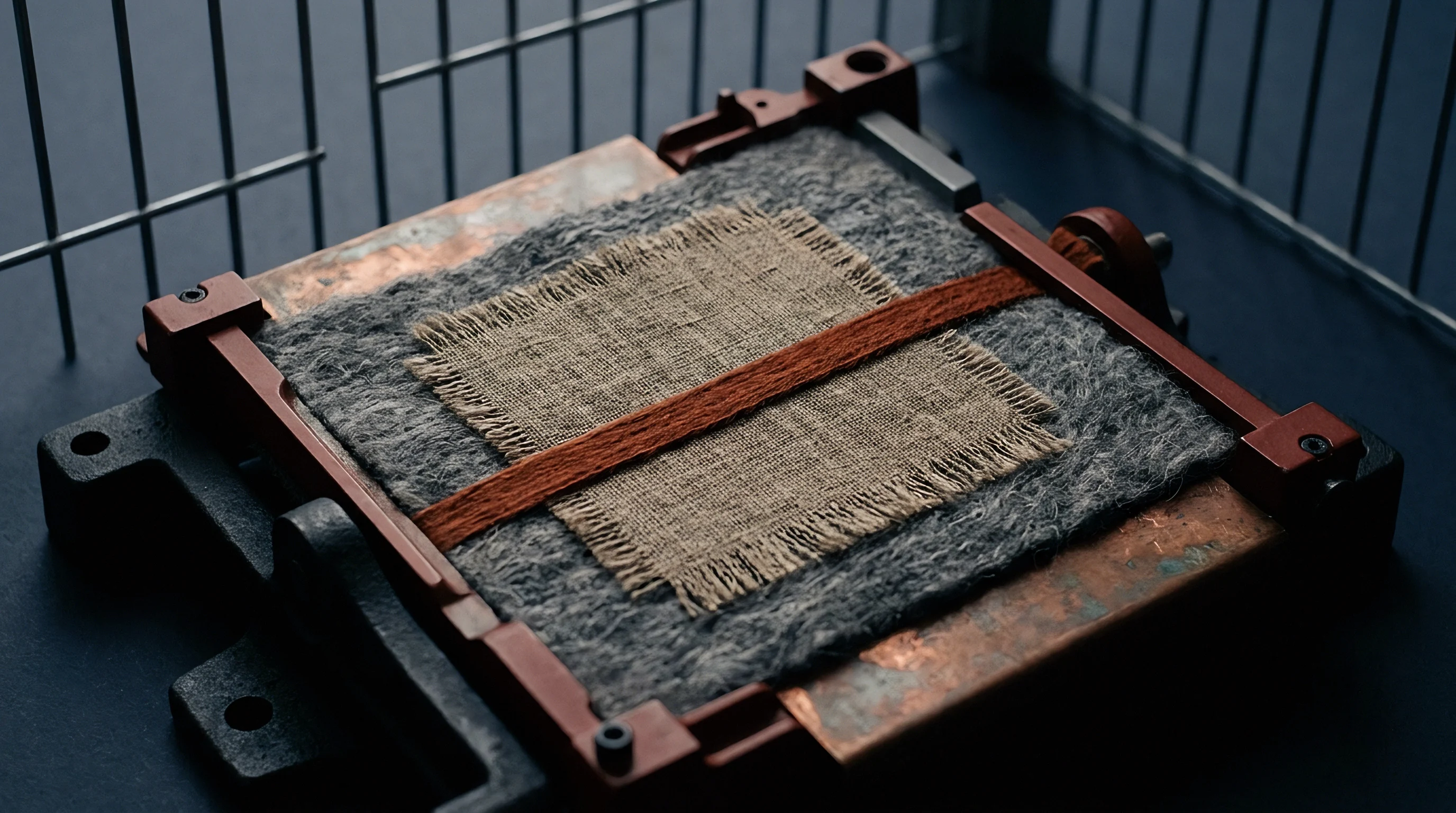
Standardized ISO 2062 Test Execution Parameters
Tensile bench clamps grip single ends under a fixed nominal pretension prior to pull. Testing single-yarn breaking force under ISO 2062 Method A requires a constant rate of extension (CRE) tester running at a speed corresponding to 100 percent strain per minute. For a standard 500 millimeter gauge length, clamp speed equals 500 millimeters per minute.
While standard gauge length is five hundred millimeters, short gauge lengths mask localized weak spots. Testing at 100 millimeters yields artificially inflated breaking tenacity values because shorter test lengths isolate flawless zones and fail to account for weak points distributed along longer thread distances under Weibull distribution statistics.
- Condition yarn packages inside the testing environment maintained at 20°C ± 2°C and 65% ± 4% relative humidity for at least twenty-four hours prior to mounting.
- Mount the specimen within air-actuated rubber-faced jaws set to a 500 millimeter gauge distance, with a nominal pretension of 0.5 cN/tex applied automatically.
- Execute fifty individual end pulls per sample bobbin across ten bobbins drawn randomly from the delivery lot to establish statistical significance.
- Discard tests where fiber slippage occurs inside the jaw faces or where breakage occurs within five millimeters of the clamp contact line.
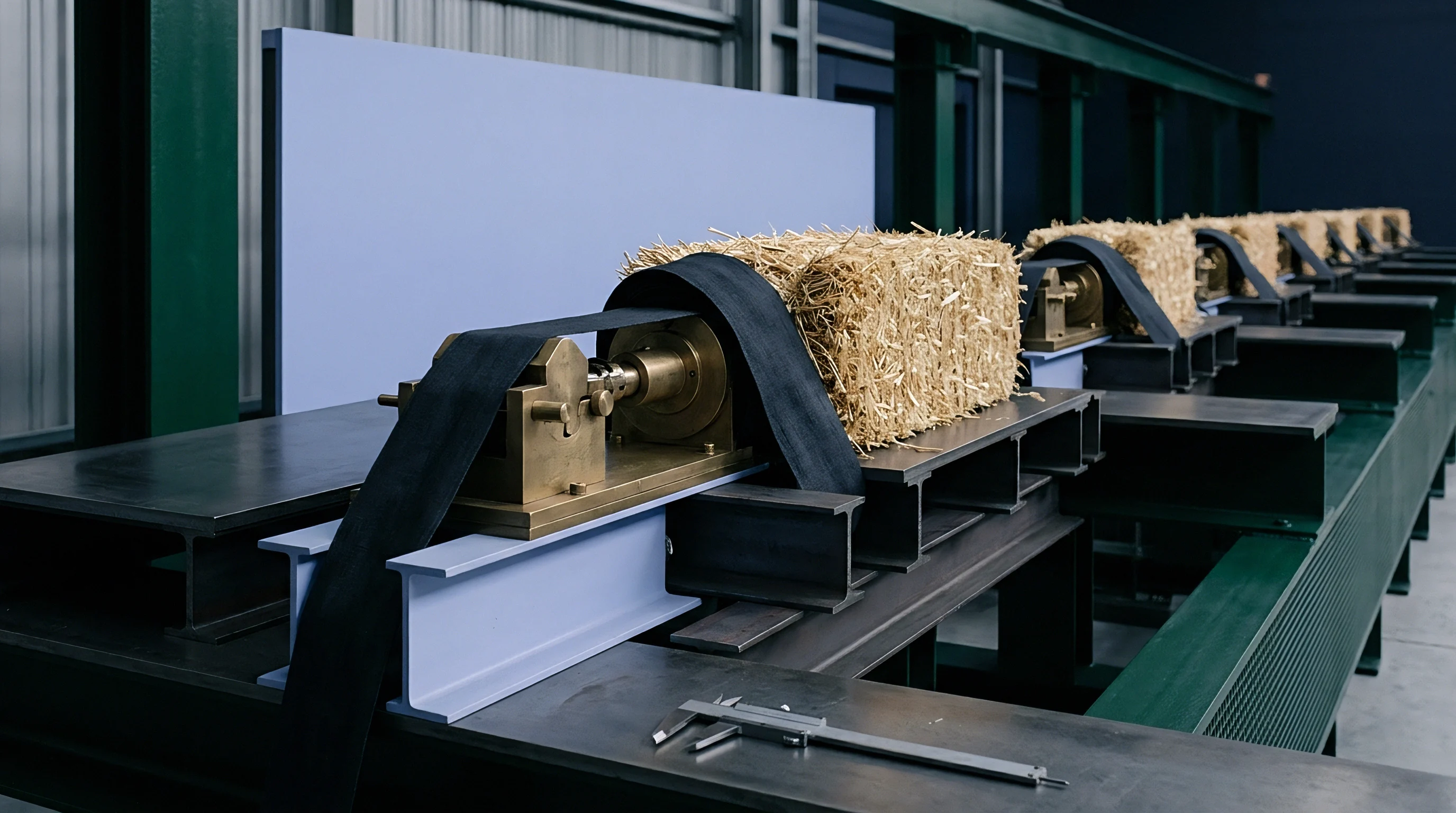
Moisture Regain Influence on Tensile Mechanics
High humidity raises flax breaking force. Unlike cotton or synthetic filaments, flax exhibits a moisture regain of 8.5 to 12.0 percent under ambient conditions. Hydration swells internal cellulose fibrils, strengthening hydrogen bonds within amorphous regions and increasing breaking force by up to twenty percent compared to dry fiber.
A sample tested at 50 percent relative humidity yields significantly lower breaking strength than the same yarn tested at standard 65 percent relative humidity. Testing laboratories must continuously record dry-bulb temperature and humidity during tension trials to normalize tenacity figures back to standard atmosphere values.
Whether high-frequency automated single-end testers operating at ten thousand meters per hour accurately predict dynamic peak loads during rapier insertion remains actively debated among mill engineers.

Tariff
Commercial agreements between flax spinning mills and weaving sheds explicitly define minimum tenacity floor limits and maximum coefficient of variation multipliers. Off-spec yarn leads to loom downtime, higher labor costs per metre produced, and expensive greige cloth defect penalties. Sourcing teams structure yarn procurement specifications to align single-yarn tensile metrics directly with financial performance guarantees.

Cost Consequences of off Specification Tenacity
Substandard yarn lots force weaving sheds to reduce loom speeds or face repeated end breaks. A rapier loom running at 400 picks per minute incurs fixed overhead costs of forty-five to seventy dollars per operating hour. When poor tenacity increases end breaks from 1.2 to 4.5 breaks per 100,000 picks, loom stop time reduces shed efficiency from eighty-eight percent to seventy-three percent, raising landed fabric production cost per metre by over twelve percent.
Unsized linen warps fail on rapier looms primarily from abrasive shear at the reed rather than absolute axial tensile fatigue.
Procurement contracts enforce strict financial deductions when delivered yarn lots fail to meet agreement tenacity thresholds. Rejection limits trigger automatic return rights or mill-absorbed price adjustments based on lot re-testing protocols.
Technical quality dossiers accompanying linen yarn shipments must contain certified ISO 2062 single-yarn tenacity charts, breaking elongation histograms, and single-end force-extension curves. Contract terms specify that lot acceptance hinges on five hundred individual tensile pulls showing zero values below a minimum tenacity floor set at 15.0 cN/tex for wet-spun long flax warp qualities.