Radial Viscosity Gradient Dynamics in Flax Middle Lamella Hydrolysis during High Speed Wet Drafting
Radial viscosity gradients dictate fibre separation dynamics in wet drafting; unsoftened core bundles generate severe mass irregularity at speeds over 200 m/min.

Hydrolysis
Submersion Kinetics in Water Baths
Flax bundles enter the wet-spinning immersion zone as compact technical fibres held together by a cross-linked matrix of highly methylated pectin, rhamnogalacturonan-I, and structural hemicellulose. Water temperature dictates how quickly these intercellular polysaccharides thermally relax, starting de-esterification and swelling within milliseconds of fluid contact. At production speeds above 250 metres per minute, the dwell time inside the conditioning trough drops to between 0.8 and 1.4 seconds.
Such short exposure leaves the wetting uneven across roving bundles measuring 250 to 450 micrometres in diameter. Water penetrates the outer circumferential fibre layers rapidly to soften the outer middle lamella, but the interior core stays dry and structurally rigid.
Pectin chains in the outer annular zone dissolve rapidly, dropping their storage modulus from 1.2 gigapascals to under 0.08 gigapascals. Dissolution follows non-Fickian diffusion dynamics: swelling creates mechanical stresses that drive fluid inward through micro-cracks between individual technical fibres. Hydrothermal excitation dissociates the calcium ions bridging unesterified polygalacturonic acid sequences, letting adjacent elementary fibres slide under minimal shear.
If bath conductivity and pH are not monitored continuously, leached calcium increases the ionic strength of the trough water and lowers the osmotic pressure driving solvent into the bundle core.
Under standard wet-spinning conditions at 65 degrees Celsius, free water penetration reaches a depth of 45 micrometres into unbleached scutched flax roving within 1.0 second.
Processing temperatures between 60 and 70 degrees Celsius optimize ester linkage cleavage without degrading crystalline cellulose microfibrils. Below 55 degrees Celsius, industrial lines cannot plasticize the pectinaceous glue, which raises peak drafting forces and causes severe roller lapping at the front nip. Above 78 degrees Celsius, the bath extracts too much structural wax and non-cellulosic encrustation, breaking bundles down into short elementary cells that fall away as trough waste.
Keeping the bath in chemical equilibrium maintains bundle integrity while bringing inter-fibre friction down to a uniform level.
Water hardness above 12 French degrees precipitates insoluble calcium pectates back onto the outer fibre boundaries, leaving abrasive deposits that score drawing rollers and break ceramic guides. Circulation systems replace the trough volume twice an hour to clear dissolved polygalacturonates and keep surface tension steady. Sourcing specifications therefore require demineralized water dosed with organic complexing agents to bind divalent cations released from raw bast tissue during long production runs.
Cleavage Rates in Polysaccharide Networks
The thermal activation energy for middle lamella pectin dissolution is 48.6 kilojoules per mole in neutral water. Hydrolysis splits the alpha-(1-4)-D-galacturonan backbone, breaking the covalent and coordinate bonds between adjacent primary cell walls. Hemicellulosic xyloglucans and glucomannans hang onto their hydrogen bonds with cellulose microfibrils longer than the pectin matrix does, giving immersion a distinct two-stage softening profile.
High-speed drafting frames cut this short, leaving the outer binding network only partially severed when the strand hits the drafting nip.
| Immersion Temperature (Celsius) | Viscosity Loss Rate (mPa s per sec) | Outer Shell Penetration Rate (um per sec) | Shear Yield Stress (kPa) | Soluble Pectin Loss (wt%) |
|---|---|---|---|---|
| 45 | 120 | 22.4 | 145.0 | 1.1 |
| 55 | 310 | 34.1 | 88.5 | 2.4 |
| 65 | 680 | 46.8 | 42.0 | 4.8 |
| 75 | 1150 | 58.2 | 19.5 | 7.9 |
| 85 | 1840 | 69.7 | 8.2 | 12.3 |
Chemical degradation moves inward along a sharp boundary from the wetted exterior to the hydrophobic core. The rate of glycosidic bond cleavage falls by an order of magnitude every 30 micrometres into the roving strand. Surfactants in the spin bath speed up wetting by dropping interfacial tension from 72.8 millinewtons per metre to under 31.0 millinewtons per metre, drawing liquid into narrow capillaries without extending dwell times.
Maintaining bath temperature within a 1.5 degree Celsius tolerance window keeps outer-layer dissolution uniform across every position on the frame.
High ring-frame speeds magnify these thermal and chemical imbalances across the bundle cross-section. Where older lines running at 80 metres per minute allowed uniform radial water uptake, modern machines at 280 metres per minute operate strictly in a transient, non-equilibrium mass-transfer regime. Fluid relies on capillary suction through voids that close quickly once outer elementary fibres swell and pinch the inner channels shut.
As a result, drafting forces jump unexpectedly whenever dry stock hits the delivery zone.
When incomplete surface hydrolysis forces unseparated technical fibres through the front rollers, yarn hairiness and mass variation rise sharply.


Gradient

Spatial Distribution of Viscosity across Bundles
Transverse fluid movement sets up a sharp radial gradient in apparent dynamic viscosity across the roving cross-section. The outer shell drops to between 10 and 50 millipascal-seconds, behaving like a lubricated Bingham plastic under drafting shear. The dry core stays unhydrolyzed and glassy, maintaining an apparent viscosity above 10,000 millipascal-seconds.
Between them sits a viscoelastic transition zone of partially solvated rhamnogalacturonan gels. This steep viscosity gap redistributes internal tensile and shear stresses during roller drafting.
Thermal analysis confirms that the glass transition temperature of the middle lamella drops from 75 degrees Celsius when dry to minus 10 degrees Celsius once moisture passes 28 percent. Because the roving core picks up under 8 percent moisture during fast passes, its glass transition stays well above the bath operating temperature. The core acts as an elastic solid, resisting axial stretch and concentrating drafting tension along a narrow central axis, while the plasticized outer shell flows and lets individual technical fibres peel away.
ISO 2370 compliance guarantees uniform fineness grading across tested lots, preventing unexpected drafting resistance caused by oversized technical bundle diameters.
Viscosity profiles follow steep exponential curves driven by local moisture levels across the bundle section. The boundary separating the sheared outer layer from the rigid core moves inward by roughly 15 micrometres for each 0.3 seconds of fluid exposure. At higher drafting speeds, this boundary freezes near the exterior, concentrating shear in the outermost two or three fibre layers.
The drafting zone has to handle this layered rheology without tearing the core prematurely.
Rheological Partitioning during Attenuation
Extensional deformation during attenuation splits the roving into distinct rheological zones. Outer fibres slide along low-viscosity pectin slip planes, pulling down into fine sub-bundles of two to four elementary fibres. Unlubricated, the core moves through the drafting field intact until tension overcomes the strength of the dry inner middle lamella.
When that core snaps, it dumps unattenuated fibre fragments into the yarn stream, leaving coarse slubs and periodic count variation.
Drafting forces reflect this structural stratification. Low forces signal good surface lubrication, while sudden spikes mark the mechanical collapse of dry core zones. Frame-mounted tension sensors record force swings from 1.5 to 18.0 newtons in milliseconds as unevenly wetted roving passes through.
Smoothing these spikes requires a flatter, more linear transition from shell to core rather than a steep exponential drop. Chemical wetting agents and controlled pre-steaming help build that linear gradient before the roving enters the drafting zone.
Uneven viscosity across the bundle causes fibres to accelerate at different points in the drafting zone. Outer fibres in the low-viscosity region reach front-roller speed well before the geometric nip line. Core fibres, meanwhile, stay trapped between slower trailing fibres until the physical nip forces a sudden speed jump.
That velocity gap creates shear stresses that split elementary fibres lengthwise, generating short fibre waste and lowering yarn tenacity.
Flax lots with high initial lignin in the middle lamella resist water penetration, pushing the unsoftened core boundary outward and increasing drafting resistance. Dew-retted flax grown under drought conditions has a tight cellular structure that blocks capillary action during fast wetting. Mills running this stock face higher roving breakage and uneven attenuation unless they extend trough residence time by adjusting roller geometry.
Selecting fibre with uniform retting degrees is essential to prevent wild viscosity gradients during drafting.
Fibre lots with inhomogeneous retting profiles lead to high end-breakage rates and erratic count variations on the wet-spinning line.

Shear
Deformation Mechanics at the Drafting Nip
High drafting velocities generate extreme shear strain rates inside the thin fluid film between adjacent flax fibres. Front roller surface speeds of 1.8 to 2.4 metres per second yield shear rates between 5,000 and 25,000 reciprocal seconds across the 2-micrometre fluid interface in the middle lamella. Under these high kinematic loads, the partially hydrolyzed pectin-water gel thins dramatically, displaying pseudoplastic flow.
Its non-Newtonian flow index falls from 0.85 under static conditions to below 0.35 under high shear, reducing sliding resistance between adjacent cell walls.
Viscous dissipation in the sheared liquid layer generates localized heat, raising interfacial temperatures 3 to 6 degrees Celsius above the main bath. This localized heat speeds up secondary pectin dissolution right inside the nip, partially offsetting short trough immersion times. However, excessive shear rates form cavitational voids in the fluid matrix, triggering sudden slip-stick transitions.
When slip-stick happens, fibres jerk forward intermittently, introducing microscopic defects in yarn mass and hairiness.
Roller pressure sets the normal load controlling fluid film thickness between sliding fibres. Industrial frames apply pneumatic or spring loads of 120 to 280 newtons per centimetre of contact width. Too much pressure squeezes lubricant out of the bundle perimeter, leading to direct cell-wall contact and boundary friction.
Too little pressure permits the core to slip unattenuated, passing heavy roving fragments straight to the flyer or spindle.
| Delivery Velocity (m per min) | Calculated Shear Rate (1 per s) | Apparent Interfacial Viscosity (mPa s) | Mean Drafting Force (N) | Drafting Force Coefficient of Variation (%) |
|---|---|---|---|---|
| 80 | 4400 | 48.0 | 3.2 | 8.4 |
| 140 | 7700 | 29.5 | 4.1 | 11.2 |
| 200 | 11000 | 19.8 | 5.6 | 15.8 |
| 260 | 14300 | 14.2 | 7.8 | 22.6 |
| 320 | 17600 | 10.5 | 11.4 | 31.4 |
Drafting zones depend on a precise balance between hydrodynamic lubrication and boundary shear. The viscous fluid layer needs to maintain enough shear stress to drag surrounding fibres along while keeping sliding friction low. When delivery speeds pass 260 metres per minute, the coefficient of variation for drafting force jumps sharply.
This instability comes from the fluid film breaking down under extreme shear, forcing dry core sections to break under dry friction rather than smooth hydrodynamic flow.
Hydrodynamic Lubrication and Slip Transitions
Fluid dynamics at the inter-fibre boundary follow modified Reynolds lubrication equations with non-Newtonian viscosity terms. Film thickness between adjacent elementary fibres ranges from 0.5 to 3.2 micrometres depending on local normal pressure and dynamic viscosity. As the outer shell attenuates, liquid is pulled into the converging wedge between sliding fibres, generating hydrodynamic lift that separates individual cell walls.
This separation prevents surface abrasion and protects the crystalline structure of the outer secondary wall.
If fluid viscosity drops too far, sliding shifts from hydrodynamic lubrication to mixed boundary lubrication. Over-hydrolysis or high bath temperatures destroy the viscous resistance needed to control fibre movement. Fibres lose cohesion and float uncontrollably between back and front rollers ~ a condition known as drafting drift.
Maintaining target viscosity provides the shear coupling required for elementary fibres to accelerate cleanly at the nip line instead of drifting in the open zone.
Draft ratios between 10 and 18 require an apparent interfacial viscosity of 15 to 35 millipascal-seconds to prevent fibre clustering and drafting waves. Adding water-soluble polymers like low-molecular-weight carboxymethyl cellulose to the trough stabilizes bath viscosity under high shear, stopping early film collapse. Mills relying on untreated river water or unconditioned process water face chronic drafting instability due to seasonal swings in water temperature and mineral content.
Fibres damaged by dry sliding show torn microfibrils and bruised cell walls, dropping final yarn tensile strength by up to 25 percent. Friction heat bakes residual pectins into insoluble, brittle crusts that crack during drying, leaving dusty yarn with poor abrasion resistance in weaving. Keeping a stable hydrodynamic film during high-speed drafting prevents these downstream defects.
Drafting waves stem from machine vibration or from forcing unplasticized core bundles through improper roller clearances.

Core
Defect Formation in Unhydrolyzed Fibre Cores
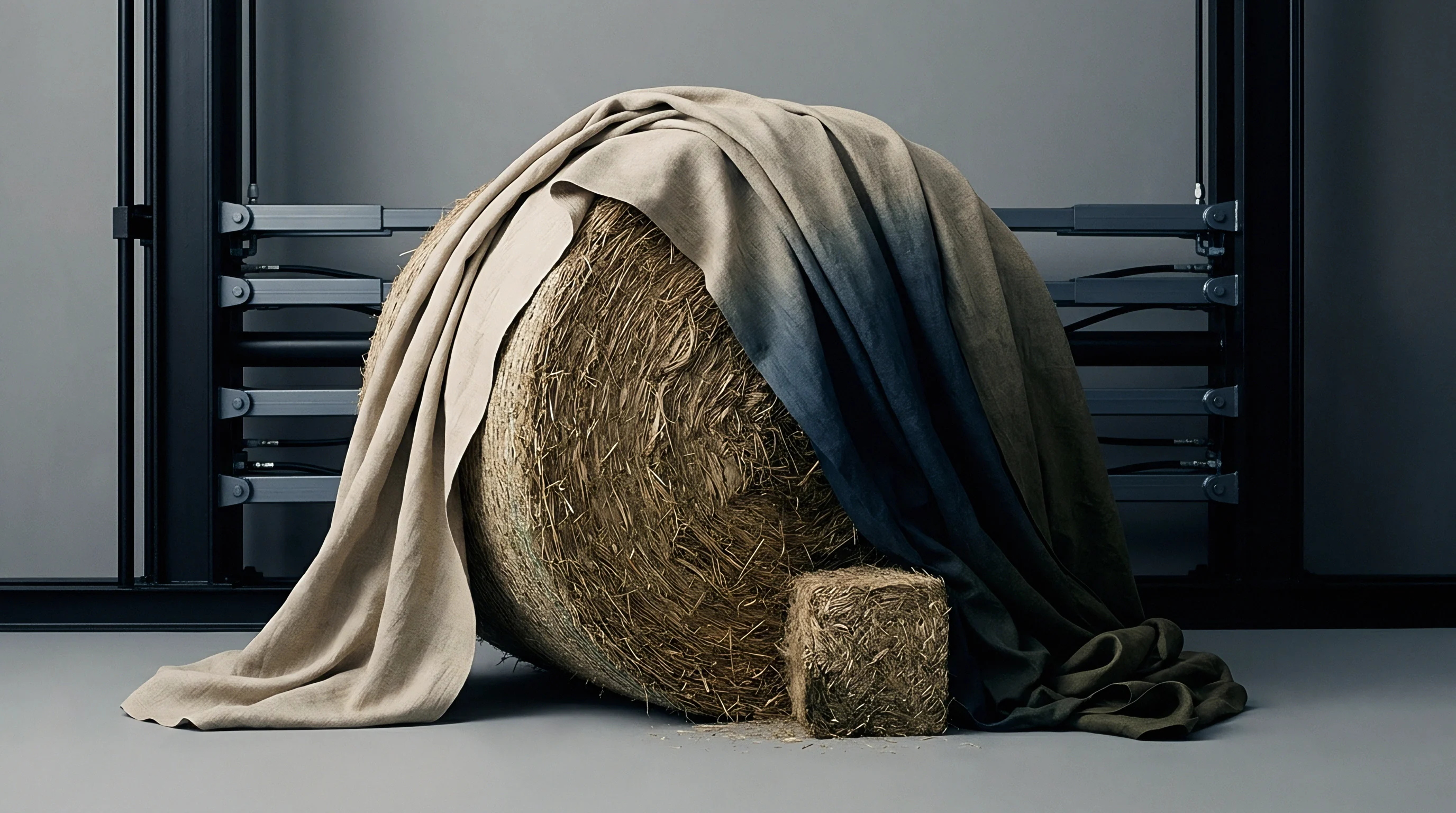
Unhydrolyzed cores are the main source of structural defects in fine wet-spun linen yarns. When an unplasticized core enters the front drafting zone, it resists attenuation and snaps into blunt, multi-fibre splints. These splints measure 60 to 120 micrometres in diameter and contain five to twelve elementary fibres held together by unsoftened middle lamella.
Protruding from the yarn, they create rough surface defects that hurt weaving performance and trigger breaks on rapier and air-jet looms.
Core fractures leave a distinct signature on mass variation analyses. Uster evenness diagrams display periodic mass spikes at wavelengths matching the drafting zone length ~ typically 50 to 85 millimetres. These drafting waves form when rigid core segments hold back floating fibres until tension breaks the friction block, releasing a dense bundle all at once.
The yarn ends up with severe mass irregularity and thin spots right after every thick slub.
A coarse core fragment passing the front drafting nip increases downstream yarn breakage rates on modern automatic winding frames.
Splint defects cut yarn elongation at break from a typical 2.8 percent to under 1.4 percent. Under tension, the boundary between the flexible sheath and rigid core creates a stress concentration point. Micro-cracks start at these discontinuities and spread across the yarn section at low strain levels.
Yarns spun from roving with dry cores break during high-tension warping and drop heavy lint during sizing.

Morphology and Mechanical Partitioning
Polarized light microscopy reveals a sharp morphological boundary between the hydrolyzed outer envelope and the dry core. Outer elementary fibres show separated polygonal cross-sections with swollen walls and open lumina. Core fibres remain locked in tight clusters with compressed lumina and intact middle lamellae.
This biphasic structure creates severe internal stress gradients as the yarn dries on the bobbin, causing torque and spirality.
Processing parameters must account for this disparity between sheath and core to prevent quality loss. Unhydrolyzed core fractions cause several specific structural failure modes during wet drafting:
- Splint formation generates thick, rigid fibre bundles that stick out perpendicularly from the twisted yarn surface. These defects catch in reed dents and drop wires during high-speed weaving, causing major warp breaks.
- Drafting wave instability produces repeating thin and thick segments along the yarn length. This unevenness ruins fabric appearance, leaving visible bar marks in plain-weave apparel.
- Longitudinal fibre splitting occurs when excessive drafting shear tears dry elementary fibres apart along their cell wall axes. Damaged cell walls reduce overall yarn tenacity and generate high lint waste during knitting and weaving.
- Differential dye uptake stems from pectin variations between the exposed core and the hydrolyzed outer shell. Finished cloth displays streaky, uneven dyeing because residual core pectins block dyestuff diffusion into crystalline cellulose microfibrils.
Roving twist must balance bundle cohesion during unwinding against fluid permeability in the trough. For a 600-tex roving, twisting beyond 45 turns per metre blocks water penetration and leaves large unhydrolyzed cores. Twisting below 20 turns per metre causes the roving to collapse in the trough, clogging guidance trumpets and wrapping around immersion rollers.
Twist levels must be calibrated to fibre fineness and retting quality to ensure uniform wetting.
Enzyme pre-treatment with concentrated pectinase offers a practical way to reduce core rigidity. Enzymatic bio-preparation cleaves polygalacturonic acid sequences before immersion, allowing fast fluid penetration even at drafting speeds above 300 metres per minute. This chemical step eliminates the viscosity gap between core and sheath, enabling full bundle separation into fine elementary fibres without raising drafting forces.
Accelerating internal moisture diffusion without damaging primary cell walls remains an active challenge in high-speed spinning mechanics.
Spindle

Twisting Dynamics with Radial Inhomogeneity
Rotational momentum from the ring traveler or flyer inserts true twist into the attenuated fibre web emerging from the front nip. When that web carries a sharp radial viscosity gradient, twisting strays from ideal helical models. Low-viscosity outer fibres wrap around dry, rigid core segments under high centripetal acceleration.
The outer fibres take on higher tensile strain during twisting, while core fibres remain straight along the yarn axis, absorbing little torsional energy.
This difference creates a layered structure with non-uniform radial packing. The outer sheath forms a tight, highly twisted shell around a loosely packed, unattenuated core. Centrifugal force at spindle speeds over 7,500 revolutions per minute throws surface water off the wet strand.
As water flings against the guards, the remaining pectin viscosity jumps rapidly, locking the twisted fibres into a rigid geometry before the yarn reaches the bobbin.
Winding tension must be controlled precisely to keep wet bobbins from crushing during high-speed winding. As wet-spun yarns dry, cellulosic fibres shrink laterally while the middle lamella hardens into a glassy adhesive layer. If winding tension exceeds 0.45 centinewtons per tex, drying shrinkage exerts heavy radial compression that crushes plastic bobbin tubes and distorts the package.
Automatic tension compensators on modern frames adjust traveler braking force to keep package density uniform across the doffing cycle.
| Spindle Speed (RPM) | Delivery Speed (m per min) | Yarn Tenacity (cN per tex) | Uster Mass CV (%) | Spinnable Count Limit (Nm) | Spinning Cost (USD per kg) | Landed Fabric Price (USD per m) |
|---|---|---|---|---|---|---|
| 4500 | 120 | 38.5 | 14.2 | 65 | 14.50 | 8.20 |
| 6000 | 180 | 34.2 | 16.8 | 52 | 11.80 | 7.10 |
| 7500 | 240 | 29.8 | 20.5 | 42 | 9.60 | 6.25 |
| 9000 | 300 | 23.4 | 26.1 | 32 | 8.20 | 5.80 |
Line productivity directly drives production economics. Raising delivery speed from 120 to 300 metres per minute cuts spinning costs from 14.50 to 8.20 US dollars per kilogram. But that throughput comes at a steep cost to yarn quality: tenacity drops from 38.5 to 23.4 centinewtons per tex, and mass variation surges from 14.2 to 26.1 percent CV as unmanaged viscosity gradients and core fractures take over at high speeds.
Producers targeting fine apparel yarns have to balance output against required quality standards.
Fibre Selection Rules for High-Speed Lines
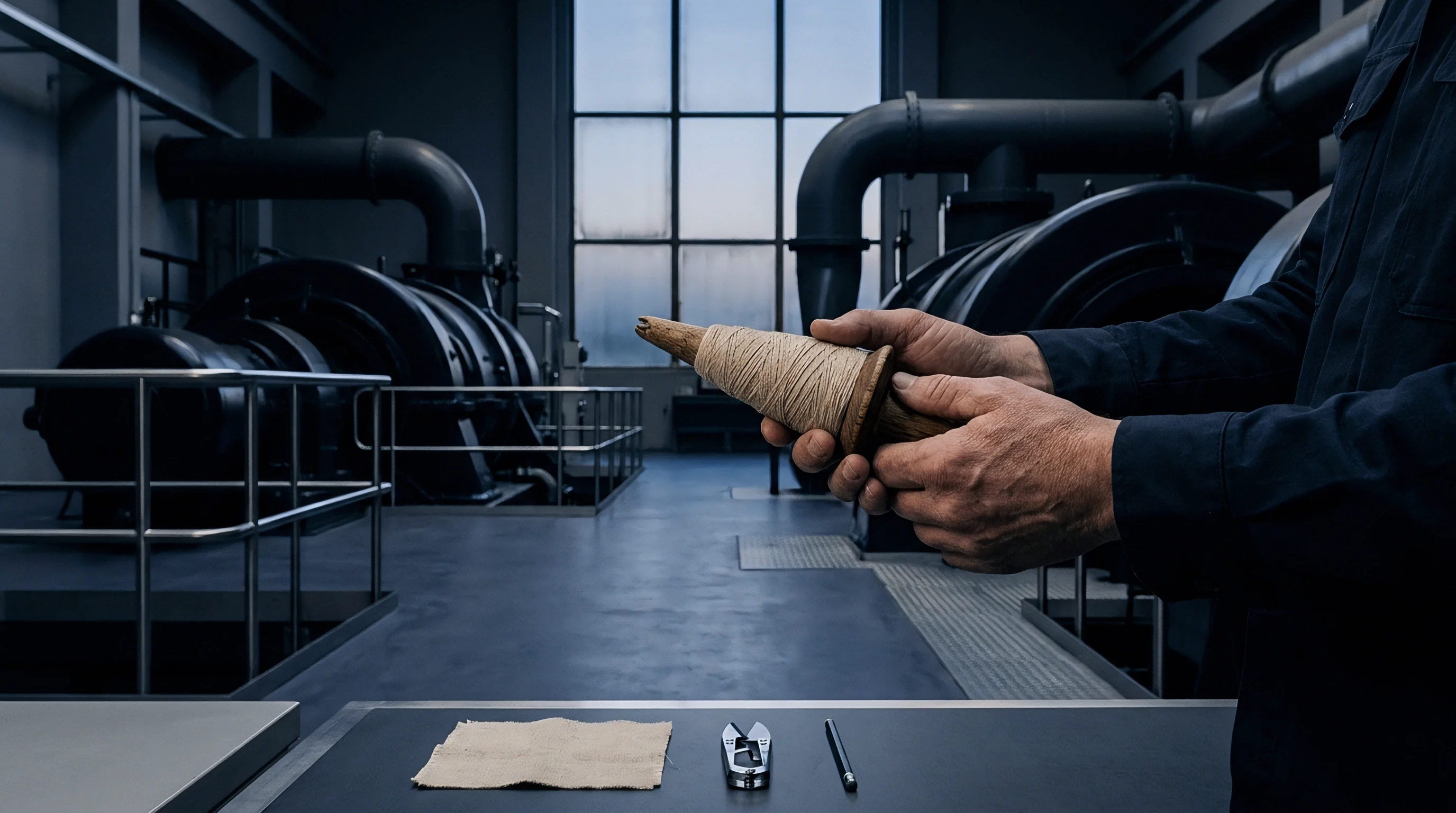
Raw material quality dictates operational stability on high-speed wet-spinning frames. Line flax intended for speeds above 220 metres per minute must satisfy strict standards for retting degree, cleanliness, and bundle fineness. Coarse or poorly retted lots create severe viscosity gradients during drafting, leading to frequent downtime and off-spec yarn.
Sourcing specialists inspect incoming shipments against standardized parameters to guarantee processability.
Procurement specifications for high-speed line flax depend on strict physical and chemical criteria:
- Retting degree sits between class 3.5 and 4.0 on the sensory scale, confirming thorough digestion of outer pectins without damaging cellulose.
- Bundle fineness exceeds 1,800 metric number under ISO 2370 testing, allowing quick fluid penetration across narrow bundle cross-sections.
- Residual lignin content stays below 2.2 percent by weight, preventing hydrophobic barriers to water absorption.
- Hackling line yield exceeds 48 percent long line fibre, showing the intrinsic strength needed to withstand high drafting shear.
Wet-spun linen yarns with high mass variation and low tenacity face steep market discounts. Weaving mills reject yarn lots with coefficient of variation values over 22 percent because frequent breaks drop loom efficiency below 80 percent on high-speed machinery. Fabric made from irregular yarn displays uneven dyeing and poor dimensional stability, forcing converters to downgrade finished bolts from apparel grade to home textiles.
Sourcing the proper fibre grade avoids these downstream losses and preserves margin across the production run.
When the drafting viscosity gradient stays controlled, fine counts up to Nm 65 run smoothly with low breakage rates.