Loom Geometry
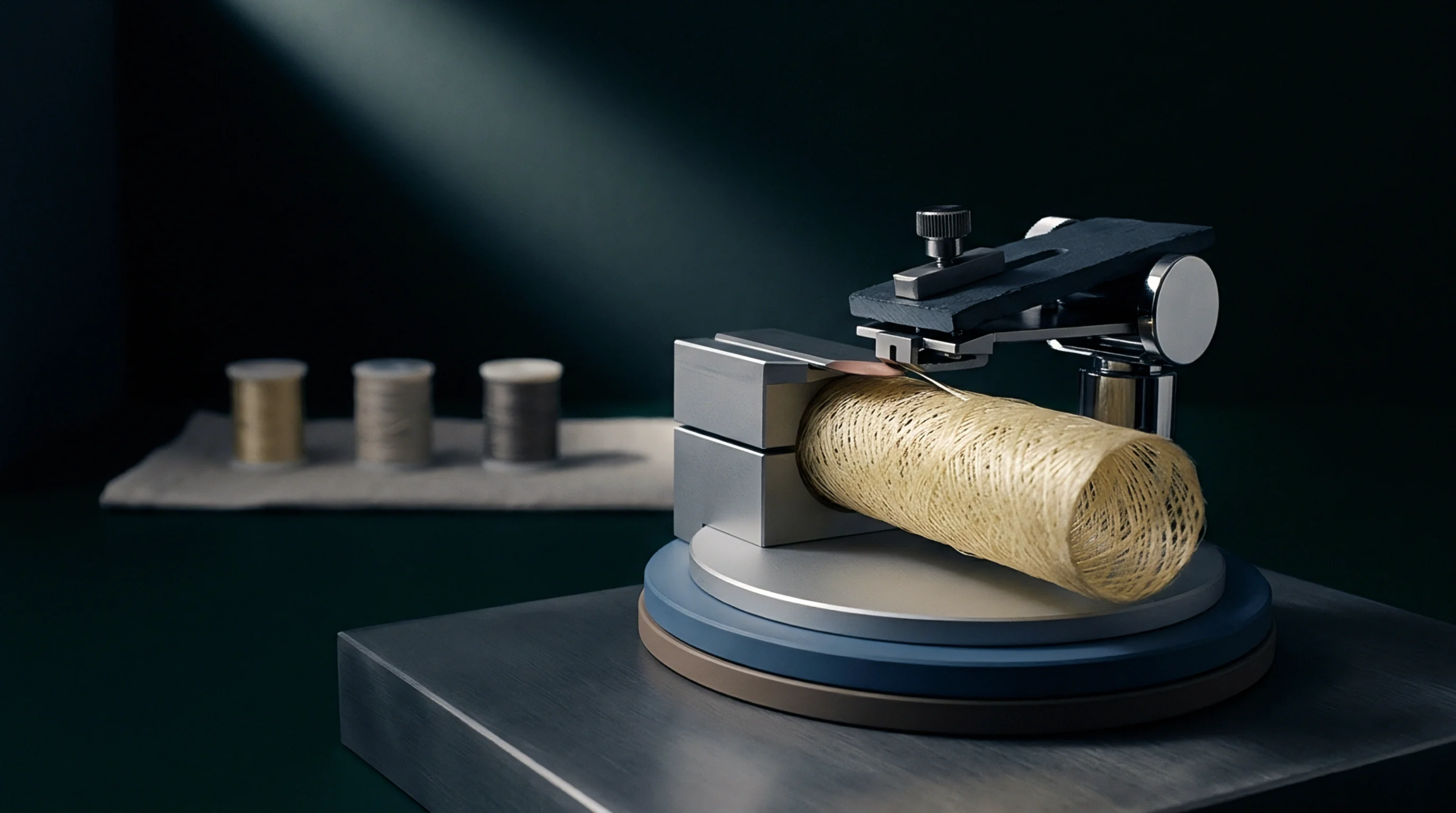
Correct tension alignment in flax weaving requires exact mechanical control at the cloth fell, where warp ends meet the final weft pick to determine fabric width and sett. Fell position stabilization prevents reed displacement during high speed battening, maintaining uniform pick density across long production runs of linen sheeting. Modern Jacquard looms deploy hydraulic dampening cylinders alongside stepper motor feedback loops to hold this boundary stationary against shifting yarn elasticity.
Fluctuating humidity levels inside the spinning mill alter flax yarn length before it reaches the harness, forcing automatic displacement compensations within the shedding mechanism.
Tension Mechanics
Mechanical regulators monitor warp tension variations continuously, translating physical deflection at the breast beam into immediate positional corrections for the cloth roll. Steadier warp tension reduces reed mark formation on raw linen surfaces, protecting the delicate pectin bonds that give flax its natural luster. Industrial operators calibrate load cells against standard atmospheric benchmarks, ensuring that dry spinning rooms do not introduce microscopic slack into the warp sheet.
Production Control
Export quality assessment protocols grade finished linen bolts according to dimensional stability across five standard testing meters. Mill inspectors record residual warp shrinkage after boiling water immersion, matching laboratory results against the original loom setting specifications. Buyers demand strict adherence to these dimensional thresholds before signing supply agreements for high grade apparel fabrics, since loose fell positioning causes skewed grain lines during commercial garment cutting.