Determining Bast Fibre Tex Values and Hackling Yield Correlates
Flax bundle tex governs hackling outturn: finer bundles yield over 50 percent long line sliver, cutting net sliver cost and unlocking counts above Nm 50.
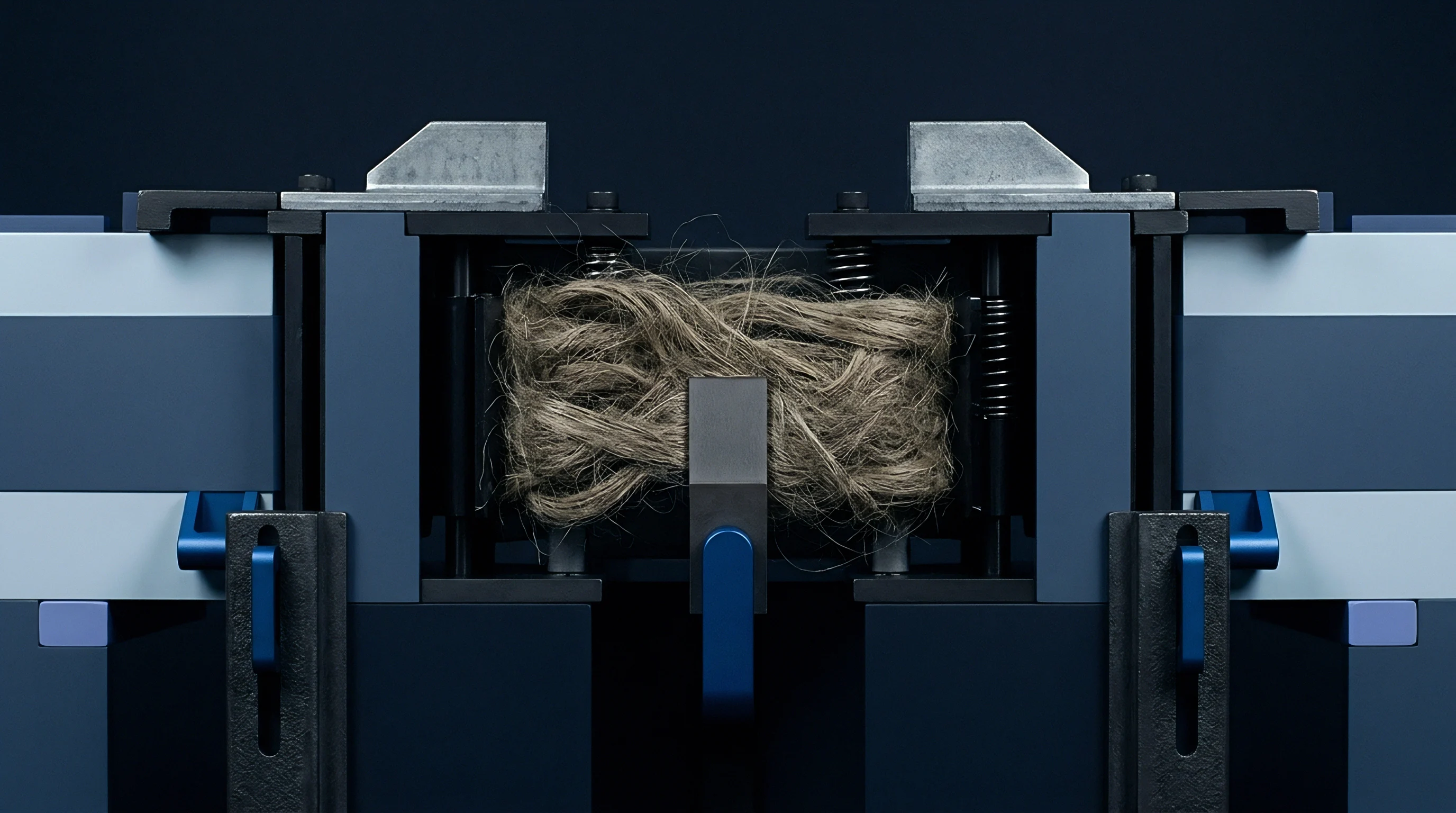

Bundle
Technical bast strands arrive at the inspection table as scutched stricks roughly one metre long. Commercial buyers grade these parcels by pulling tufts by hand, checking colour uniformity, and flexing the middle stem to feel cortical stiffness. Raw strand thickness directly dictates long line yield during combing: when strands have a high linear density, middle lamella gums bind hundreds of elementary fibres into rigid groups.
These coarse clusters resist pin penetration and snap transversely across the stem instead of splitting cleanly lengthwise.
Coarse bundles resist fine drafting.
Measuring linear density in the laboratory relies on cut-and-weigh gravimetric sorting or pneumatic airflow instruments calibrated to specific surface area. In commercial processing, technical strands range from 1.8 tex to 4.5 tex. The individual elementary fibres inside them run between 0.18 tex and 0.38 tex, with lengths rarely exceeding forty millimetres.
The ratio between technical bundle fineness and elementary cell fineness sets the maximum drafting attenuation possible during roving preparation.
Strands that split cleanly under thumb pressure yield long line sliver rather than short combings.
Spinning mills buying scutched straw require precise linear density measurements to forecast the balance between hackled line sliver and hackled tow. Finer technical strands yield far higher line recovery, whereas coarse strands produce heavy volumes of short, tangled combings that sell at a steep discount to long line fibre. A scutching lot’s financial return hinges almost entirely on this split.
Fibre mass dictates drafting limits.
| Bundle Linear Density (tex) | Mean Strand Diameter (microns) | Hackling Line Outturn (mass percent) | Hackled Tow Fraction (mass percent) | Maximum Achievable Wet Spun Count (Nm) |
|---|---|---|---|---|
| 1.8 to 2.2 | 45 to 65 | 52 to 56 | 34 to 38 | Nm 60 to Nm 80 |
| 2.3 to 2.8 | 66 to 85 | 46 to 51 | 39 to 44 | Nm 39 to Nm 50 |
| 2.9 to 3.5 | 86 to 110 | 40 to 45 | 45 to 50 | Nm 26 to Nm 36 |
| 3.6 to 4.5 | 111 to 145 | 32 to 39 | 51 to 58 | Nm 14 to Nm 24 |
Strands with linear densities above 3.5 tex fragment heavily when hit by the initial hackling bars. That mechanical impact shatters under-retted cortical tissue, sending potential line mass straight into the tow box. Any combed sliver that makes it through contains irregular clusters that jam drafting rollers during wet spinning.
Graders check bundle cleavability by hand-splitting the base of the strick before feeding the lot.
Strands with low cohesion and thin cross sections pass through the combing sheets intact, while thick, woody groupings break down into low-value combings.
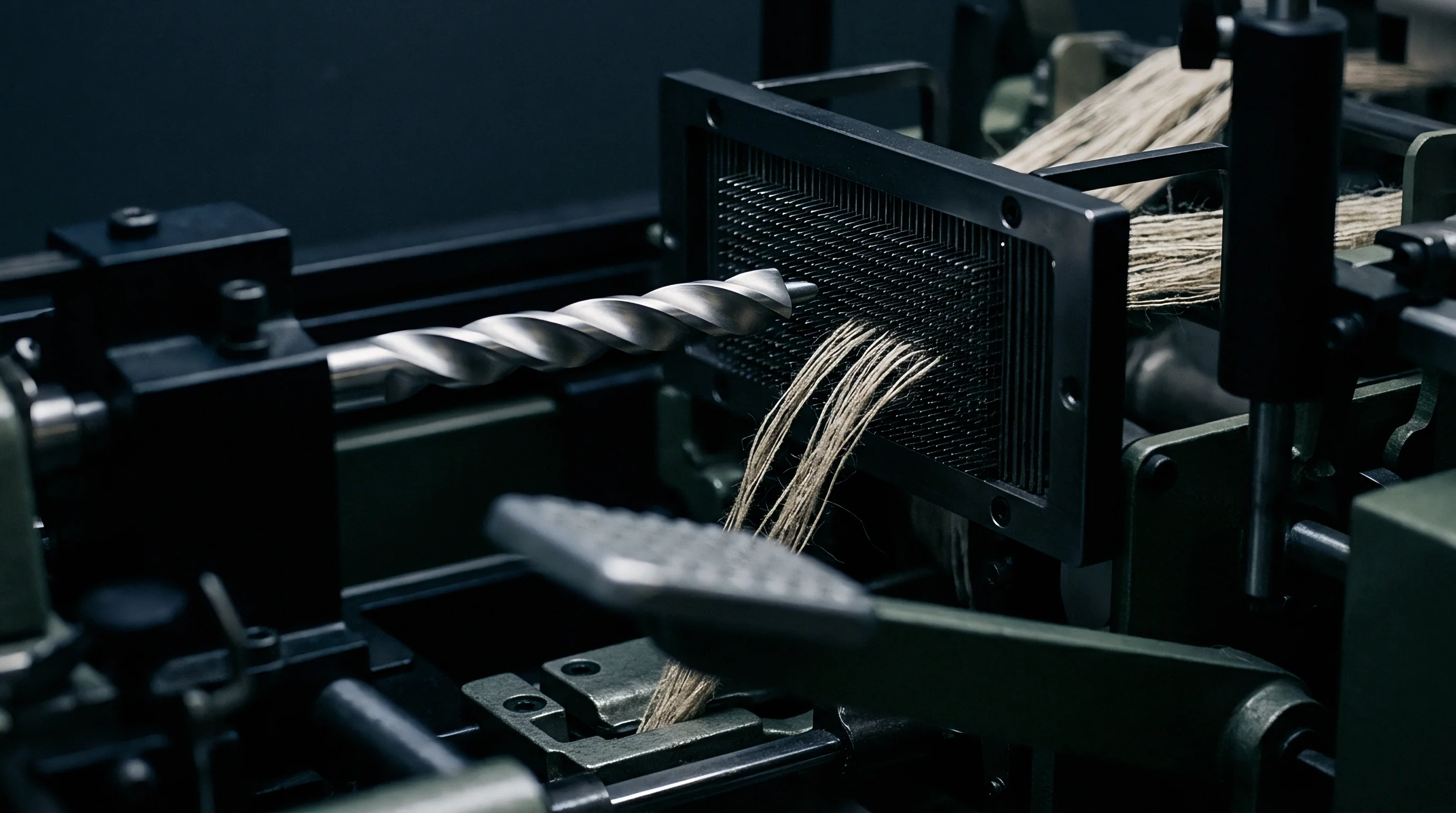

Airflow
Pneumatic resistance testing under ISO 2370 determines the specific surface area of a compacted test plug. Air forced through a cylinder of parallelized flax encounters drag proportional to total fibre perimeter. Finer strands present more surface area per unit mass than coarse bundles, so the pressure drop across the chamber indicates mean linear density.
Maintaining calibration requires regular verification against gravimetric cut-and-weigh standards derived from ISO 1973 procedures.
Moisture shifts balance readings.
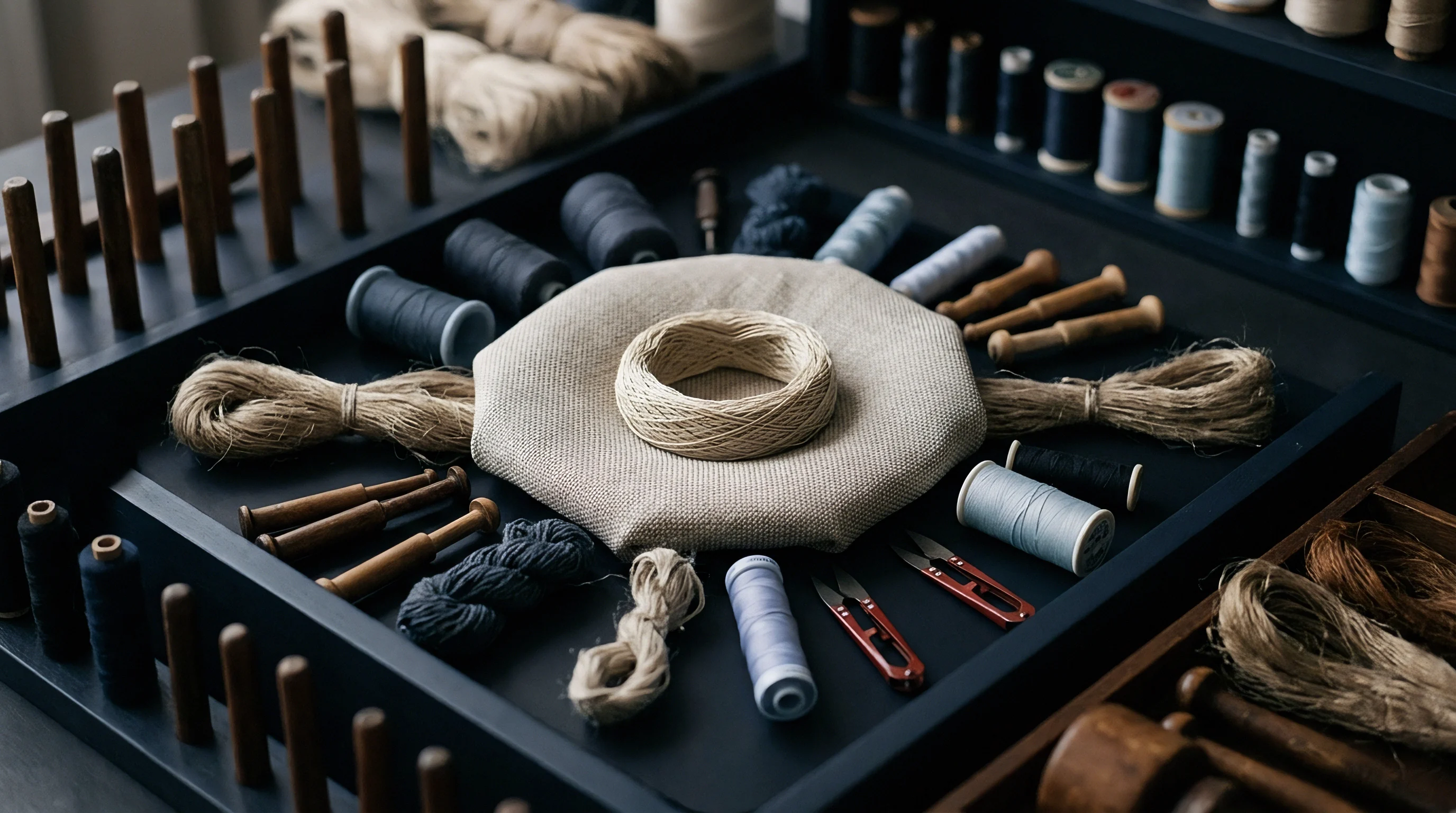
What Governs Fibre Bundle Tex Measurement?
Gravimetric cut-and-weigh procedures establish the baseline mass per unit length on conditioned specimens. Technicians clamp parallel fibre arrays, cut a uniform central section (typically 10 mm or 20 mm), and weigh the mass on an analytical balance precise to six decimal places. Dividing aggregate mass by total cut length and multiplying by bundle count gives the direct tex value.
Microscopic image analysis is also used alongside this method, measuring cross-sectional areas across polarized optical fields.
Specimens tested below sixty percent relative humidity register an artificial fineness increase of three decitex.
Changes in moisture content directly affect measured airflow values. Flax fibres absorb ambient water rapidly because of amorphous cellulose regions and residual middle lamella hemicelluloses. A plug tested at eight percent regain displays a smaller effective diameter and denser packing than the same plug conditioned to the official twelve percent commercial regain standard.
Laboratories correct pneumatic readings using empirical regain curves published by the International Confederation of Flax and Hemp.
Dew retting varies across stems.
Direct gravimetric testing shows that a commercial lot delivered as 2.4 tex often carries a coefficient of variation over forty percent, with individual bundles in a single handful ranging from 1.2 tex to 5.8 tex. This internal variation comes from uneven fungal activity during field dew retting: straw at the top of the windrow undergoes stronger moisture cycling and enzymatic breakdown than shaded lower stems. Contracts that specify only a single average fineness conceal this spread, leaving downstream spinners vulnerable to roving breaks.
- Under-retted cortical sheaths prevent uniform airflow through the test plug, leading to false readings of coarse bundle groupings.
- Residual shive fragments occupy volume inside the cylinder without adding fibre surface area, skewing calculated specific area downward.
- Specimen crimp variations resist compression in the chamber, forming variable channels that vent air prematurely.
- Environmental humidity drift alters cell wall swelling over long testing shifts, shifting apparent linear density by several tenths of a tex.
Controlled trials show that a 2.4 tex technical bundle fineness correlates with a 48.5 percent hackling line yield on dew-retted Normandy straw. This baseline assumes an initial moisture regain of twelve percent and a pin progression starting at three pins per centimetre. If mill humidity drops below sixty percent, increased bundle brittleness causes more pin fractures, lowering line yield to 45.5 percent on identical raw material.
How microscopic cell wall lumen dimensions relate to total pneumatic airflow resistance remains unsettled across different regional cultivars. Technicians continue to debate whether airflow methods reliably distinguish hollow, thin-walled bast cells from solid, thick-walled technical groupings.
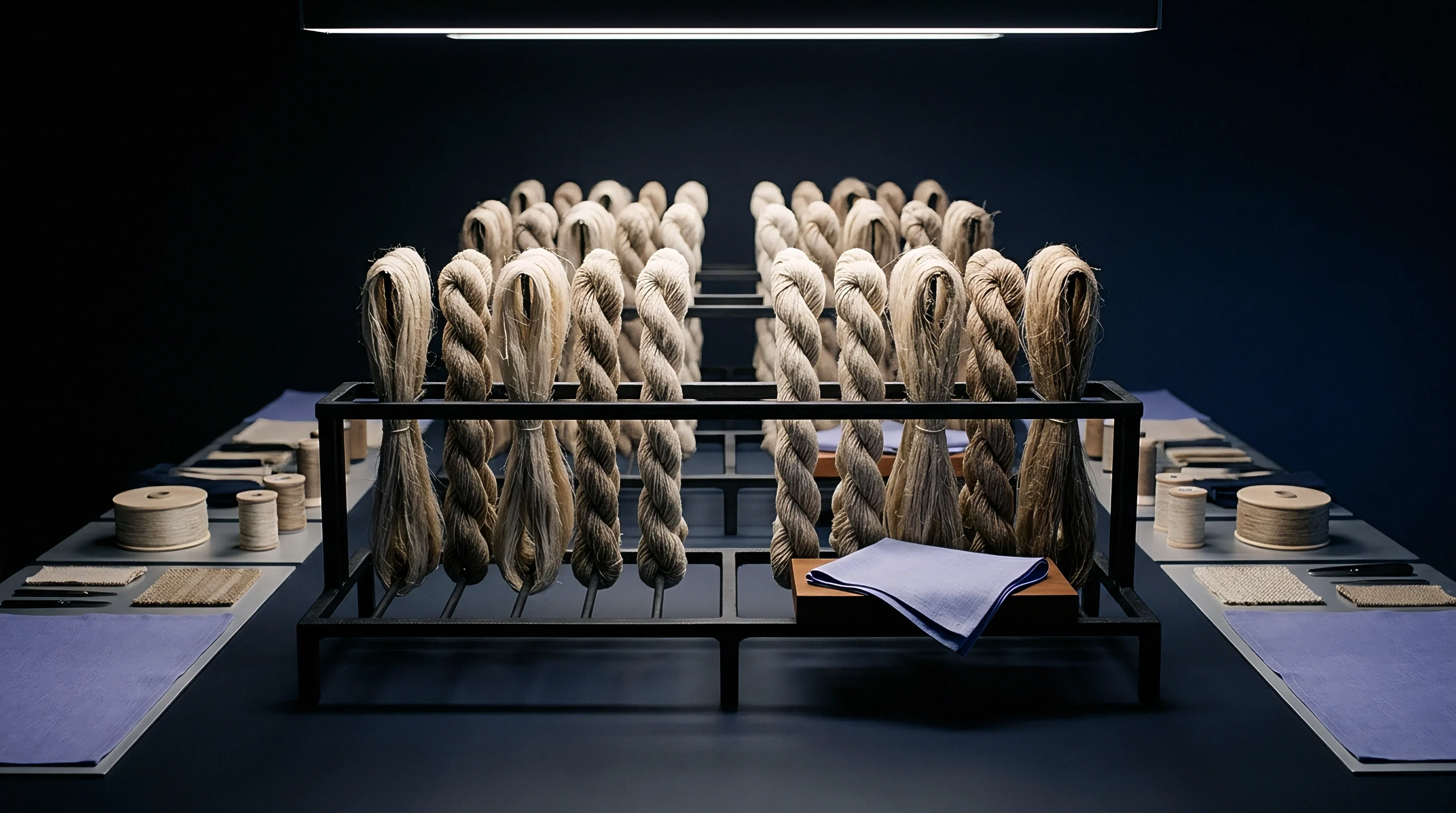

Comb
Pinned aprons advance stricks through graduated needle fields to break cortical bonds. Industrial hackling machines clamp stricks in moving steel holders, presenting the root end and top end sequentially to rotating vertical belts. Coarse round pins on the opening aprons enter the fibre fringe to disentangle twisted strands.
Subsequent passages use higher pin densities to flatten the strick and tear residual pectins apart.
Pins shatter brittle cell walls.

Where Does Stranded Pectin Depress Yield?
Incomplete microbial retting leaves intercellular gums cementing adjacent cell walls. Polygalacturonase enzymes secreted during dew retting target rhamnogalacturonan backbones in the middle lamella. When dry weather interrupts retting, fungal hyphae fail to colonize the inner bast ring.
The resulting strands retain tough calcium-pectate bridges that resist hackling pins; when the pinned bars strike these stiff junctions, they snap the strand at the stem node rather than separating it into parallel elements.
Cohesion governs sliver consistency.
Combing pin dynamics mirror deformation mechanisms in wire-drawing dies, where frictional shear either burnishes the substrate or tears the surface depending on lubrication. Bast fibres moving past tempered steel pins generate friction that strips outer gummy layers while inducing intense transverse tension. Excessive pin speeds cause surface shear failure in dry fibres, forming micro-cracks along the secondary cell wall.
Short fibres migrate toward waste.
Testing shows a mean bundle cleavage force of 18.2 centinewtons per tex under dry room ambient conditions. This value measures the resistance required to split technical aggregates into elementary units. Straw with a cleavage force above 24 centinewtons per tex generates heavy comb waste; when cleavage resistance exceeds the transverse tensile strength of individual cell walls, the pins snap the stem, dropping thirty to forty percent of potential line flax into the tow box.
Fine needle penetration converts unretted cortical bark into carding waste.
Secondary tow shaker screens recover short fibres shed between consecutive hackling sheets. Processing records show an average secondary tow recovery rate of 34 percent on standard double-sided comb configurations. This operational average fluctuates between 26 percent and 41 percent depending on machine maintenance cycles.
Sourcing managers use a conservative 28 percent floor when forecasting net line-and-tow value generation in financial models.
- Holder clamping locks the raw strick under pneumatic pressure, preventing root pullout during aggressive initial pin contact.
- Opening apron passage applies low-density round pins to disentangle twisted straw ends, shedding coarse woody shive and unbroken stem sections.
- Intermediate needle penetration drives medium-gauge flat pins through the central body, cleaving technical bundles along natural pectin seams.
- Finishing sheet combing draws high-density fine needles through the fringe, removing short fibres under twenty centimetres and sizing the remaining line sliver.
Tow absorbs mechanical impact.
Elevated tow yields during dry winter months stem from ambient humidity variations on the factory floor rather than defective retting lots in the warehouse.

Conversion
Scutched flax valuation hinges on converting raw strick mass into usable line sliver. Commercial transactions quote scutched flax per metric ton, but spinning profitability depends on the cost per kilogram of combed line sliver delivered to drawing frames. Material lost to hackled tow represents a significant economic downgrade, as tow sells on the open market at roughly one-quarter the price of long line sliver.
Clean separation preserves line margins.
Consider a 20-tonne commercial lot of scutched flax straw. Grade A scutched flax priced at 4,800 USD per metric ton carries an average technical bundle linear density of 2.2 tex. Processing this lot through modern hackling machinery yields 53 percent line sliver (10,600 kg) and 39 percent hackled tow (7,800 kg), with the remaining 8 percent lost as dust, shive, and processing waste.
Hackled tow trading at 1,250 USD per metric ton generates 9,750 USD in offset revenue.
Subtracting this tow credit from the initial raw material cost of 96,000 USD leaves a net raw material expenditure of 86,250 USD across the 10,600 kg of long line sliver ~ or 8.14 USD per kilogram of line sliver. Processing this sliver into a standard Nm 39 line yarn through wet spinning adds 4.50 USD per kilogram in conversion costs, bringing total yarn manufacturing cost to 12.64 USD per kilogram. Woven into plain apparel linen 150 centimetres wide at 180 grams per square metre, the yarn yields finished fabric with a raw input cost of 3.41 USD per linear metre.
Pectin content dictates roving softness.
By comparison, an equivalent 20-tonne purchase of Grade C scutched flax at 3,600 USD per metric ton, with a coarse linear density of 3.8 tex, yields only 35 percent line sliver (7,000 kg) while tow generation rises to 55 percent (11,000 kg). Offsetting the 72,000 USD raw material cost with 13,750 USD from tow sales leaves 58,250 USD spread over 7,000 kg of combed line. Net raw material cost per kilogram of line sliver climbs to 8.32 USD, higher than that of the Grade A lot.
Fine yarns demand low variance.
| Lot Parameter | Grade A Parcel (2.2 tex) | Grade B Parcel (2.9 tex) | Grade C Parcel (3.8 tex) |
|---|---|---|---|
| Scutched Fibre Invoice (USD/tonne) | 4,800 | 4,200 | 3,600 |
| Combed Line Yield (mass percent) | 53.0 | 44.0 | 35.0 |
| Combed Tow Yield (mass percent) | 39.0 | 47.0 | 55.0 |
| Net Line Sliver Cost (USD/kg) | 8.14 | 8.23 | 8.32 |
| Maximum Target Yarn Count (Nm) | Nm 50 | Nm 36 | Nm 24 |
| Finished Fabric Cost (USD/linear metre) | 3.41 | 3.62 | 3.94 |
| Assumptions: 20-tonne input lot mass; hackled tow credit fixed at 1,250 USD/tonne; fabric specifications set at 150 cm width, plain weave, 180 grams per square metre; finished metres calculated at 92 percent weaving efficiency. | |||
Spinning trials expose lot variance.
Lower hackling yields alter operational balance in the preparation room. Coarser line sliver requires double drawing passages to disperse thick spots, increasing energy consumption and equipment wear. On the spinning frame, higher end-breakage rates force operators to cut spindle speeds from 6,500 rpm to 5,200 rpm to avoid balloon collapses in the wet-spinning trough.
- Bundle fineness thresholds cap the maximum wet-spun yarn count, keeping low-grade raw material off fine yarn lines.
- Moisture regain tolerances limit commercial weight adjustments, ensuring mills do not pay long-line prices for excess water.
- Tow value credits buffer baseline input costs, providing a financial floor when yarn demand softens.
- Shive content ceilings protect drafting roll aprons and spinning frame pigtail guides from accelerated wear.
Purchasing agents who buy under-retted, coarse-bundle lots solely for their lower upfront price per metric ton quickly see those savings erased by lower combing yields, extra downtime, and a higher cost per metre of delivered grey cloth.

Settlement
Commercial purchase contracts establish legal standards for moisture regain, line yield fractions, and mean linear density. Transactions governed by International Flax and Hemp Federation terms define exact procedures for sampling and commercial mass determination. Certified testing laboratories draw core samples from ten percent of unbroken bales in an incoming container; if conditioned weight falls below declared invoice mass, the seller issues a credit note for the shortfall.
Invoices settle on dry mass.
Settled standards protect the buyer.
Disputes over hackling yield require standardized pilot combing trials on calibrated laboratory units. Standard contracts allow a tolerance of plus or minus 1.5 percentage points on declared line yield. If an independent laboratory finds a line outturn below that threshold, the shipment’s commercial valuation resets automatically based on the verified ratio of long line sliver to hackled tow.
A verified line yield deficit exceeding two percentage points entitles the buyer to invoice deductions matching the tow price differential.
Under CELC Arbitration Rules, if a lot’s bundle fineness is coarser than contract specifications by more than 0.4 tex, the receiving mill may reject the shipment outright or deduct five percent from the gross invoice value.